Your Request is under process, Please wait.

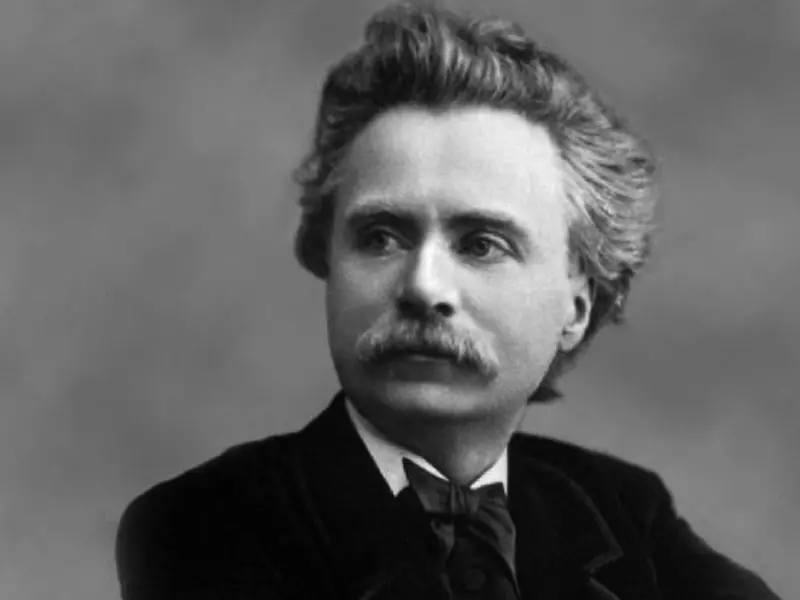
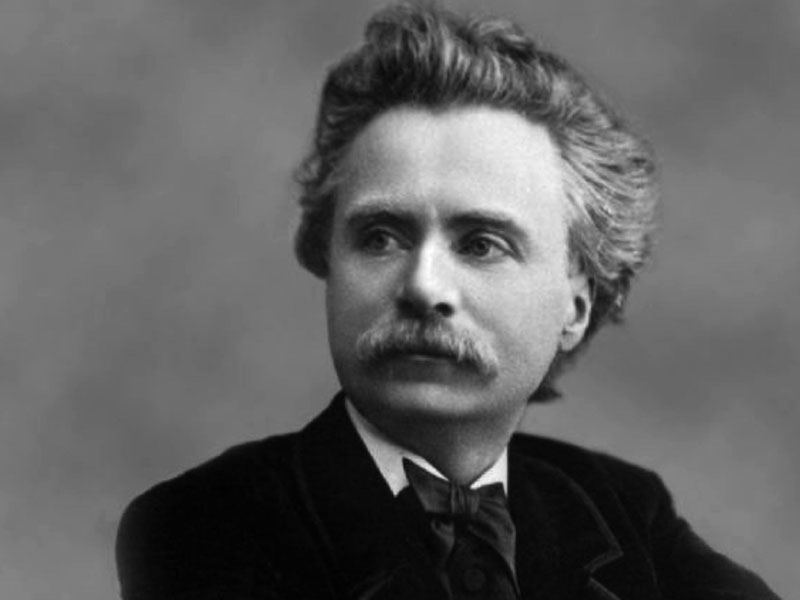
With its thunderous opening piano flourish, Edvard Grieg’s Piano Concerto bursts onto the scene as a quintessential statement of youthful Romantic passion. Composed in 1868 when Grieg was just 24, it was his first and only concerto, a work brimming with breathtaking virtuosity, unforgettable melodies, and the unmistakable sounds of his native Norway. The concerto’s success was famously championed by the elder statesman of the piano, Franz Liszt. In 1870, the nervous young Grieg presented his manuscript to the great master in Rome. Liszt, a legendary sight-reader, proceeded to play the entire,
...A Young Man's Masterpiece
In 1870, a young and still relatively unknown Norwegian composer named Edvard Grieg made a pilgrimage to Rome to meet the most revered and feared figure in the musical world: the aging lion, Franz Liszt. Grieg nervously presented the manuscript of his new piano concerto. As Grieg himself later wrote, Liszt took the score, went to the piano, and proceeded to sight-read the entire work, playing both the solo and orchestral parts, with astonishing power and accuracy. "He jumped up, strode across the room, and returned with a theatrical gesture, crying out: 'Brilliant! Original! It is true Nordic stuff!'" This emphatic seal of approval from the greatest pianist of the age was a tremendous validation for the young composer and helped cement the concerto's place on the international stage. Liszt recognized immediately what has made the work an enduring masterpiece: its brilliant originality and its authentically Norwegian soul.
The Echo of Schumann A Shared Key, A Different Voice
It is impossible to discuss Grieg’s concerto without acknowledging the influence of Robert Schumann's own Piano Concerto in A minor. Grieg had heard Schumann’s masterpiece performed in Leipzig and deeply admired it. The similarities are clear: both are in the same key, both begin with a powerful, attention-grabbing flourish for the piano, and both prioritize lyrical expression over empty virtuosity. However, to call Grieg’s work a mere imitation is to miss the point entirely. While Grieg may have borrowed the formal blueprint from Schumann, the musical language—the melodies, the harmonies, the rhythms—is entirely his own. Where Schumann’s work is quintessentially German Romantic, Grieg’s is fiercely and proudly Norwegian.
The Most Famous Opening in Music A Cry from the Fjords
The concerto’s opening is one of the most famous and dramatic in all of classical music. A single, suspenseful timpani roll is answered by the solo piano, which enters with a thunderous, cascading flourish that tumbles down the keyboard. This is not just a random virtuosic gesture. The melodic shape of this opening figure—a descending second followed by a descending third—is a characteristic fingerprint found throughout Norwegian folk music. In this single, electrifying gesture, Grieg announces the work's national identity. It is the musical equivalent of a cry echoing across a fjord, a powerful call to attention that immediately signals a new and distinctive voice.
Movement I: Allegro molto moderato Heroic Passion and Lyrical Grace
The first movement is a marvel of dramatic contrast. After the explosive opening, the woodwinds introduce the main theme, a simple, plaintive, and folk-like melody. This is followed by the second theme, a beautifully lyrical and soulful melody in the cellos that is pure, heartfelt song. The movement unfolds in a passionate dialogue between these two ideas, alternating between moments of heroic, stormy drama and passages of tender, intimate lyricism. The piano part is fiendishly difficult, demanding both power and poetry from the soloist. The movement culminates in a massive, unaccompanied cadenza, a brilliant showcase of virtuosity that Grieg wrote himself, before the orchestra returns for a powerful and triumphant close.
Movement II: Adagio A Nordic Dream
The slow movement is a dreamlike interlude of sublime, poetic beauty. It begins with the string section, playing with mutes to create a warm, hazy, and distant sound. The solo piano then enters with the main theme, a serene and exquisitely beautiful melody that unfolds with a feeling of peaceful contemplation. The music gradually builds to a passionate and powerful central climax, with the piano engaging in a brilliant dialogue with the full orchestra, before the mood subsides, and the movement ends as it began, in a state of quiet, dreamlike tranquility.
Movement III: Allegro moderato molto e marcato A Rustic Folk Dance
The finale is a thrilling and energetic conclusion that is steeped in the rhythms of Norwegian folk dance. The main theme, introduced by the piano, is a vigorous and highly syncopated tune in the style of a halling, a traditional Norwegian folk dance known for its athletic leaps and rustic energy. This energetic dance music is contrasted with a sublime second theme, a broad and beautiful melody of almost hymn-like nobility, introduced by a solo flute over a shimmering string accompaniment. The movement’s most glorious moment occurs near the end, when this lyrical theme is transformed from a gentle song into a majestic and triumphant anthem in A major, proclaimed by the full orchestra. This powerful transformation brings the concerto to a brilliant, heroic, and utterly satisfying conclusion.
Follow us :


Sheet Music International - Copyright 2026 all rights reserved