Postcards from a Reluctant Masterpiece
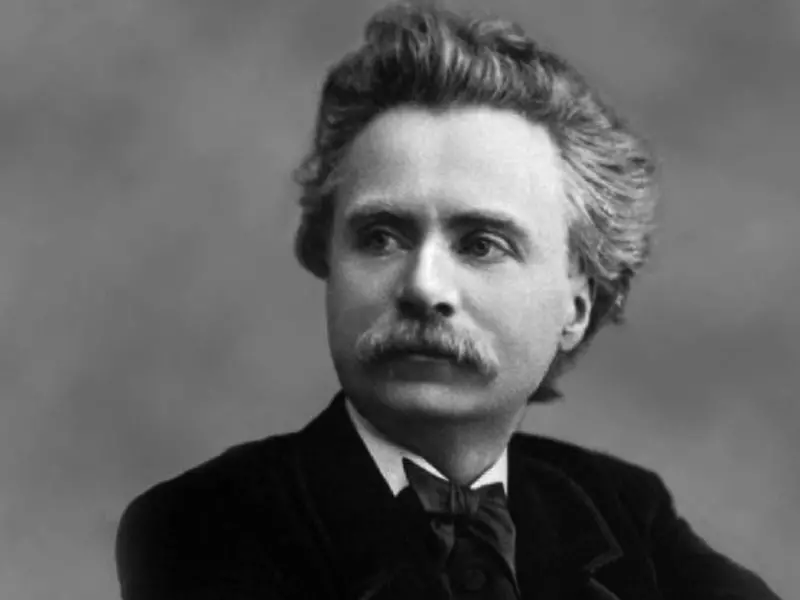
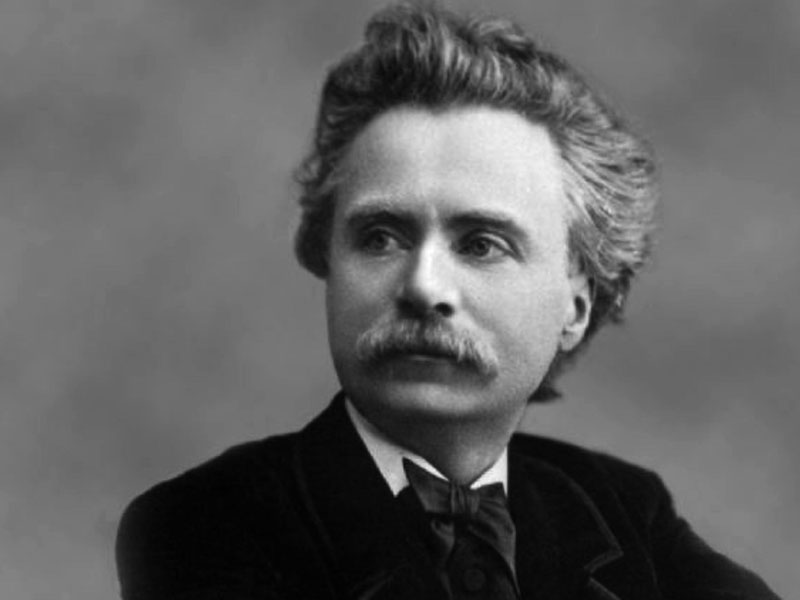
"I have been composing music for Ibsen's Peer Gynt... and it is a terribly intractable subject!" wrote Edvard Grieg to a friend in 1874. He had accepted the commission from Henrik Ibsen out of a sense of national duty, but he found the sprawling, fantastical play to be a musical nightmare. The story follows the charming but selfish Peer on a decades-long journey from the Norwegian mountains to the deserts of Africa and back again, encountering trolls, demons, and madmen along the way. "I have to do something for the Hall of the Mountain King," Grieg complained, "and I literally can't bear to listen to it, it reeks of cow-pies and ultra-Norwegianism!" Despite his protestations, the music he created was a triumph, and the two concert suites he later arranged from the full score would make him an international superstar, forever linking his name with the adventures of Ibsen's unmusical hero.
Ibsen's Epic Play The Story of Peer Gynt
Henrik Ibsen's Peer Gynt is not a realistic drama, but a surreal and satirical five-act "dramatic poem. " Its title character is a Norwegian peasant who is a pathological liar and fantasist. He avoids all responsibility and lives by the troll philosophy of being "true to yourself—and to hell with the world. " He embarks on a wild series of adventures across the globe, becoming a slave trader in America, a wealthy prophet in Morocco, and a historian in a Cairo madhouse. He returns to Norway as a broken old man, his life wasted, and is only saved from damnation by the unwavering love of the faithful Solveig, the woman he had abandoned decades earlier. Grieg’s music was essential in bringing this complex, often bizarre, fantasy to the stage.
Movement I: Morning Mood (Morgenstemning) A Sunrise in the Sahara
This is one of the most famous melodies ever composed, a piece that has become the universal soundtrack for a serene sunrise. It is the ultimate musical irony, therefore, that Grieg did not compose this music to depict a misty Norwegian fjord. In the context of the play, "Morning Mood" occurs at the beginning of Act IV, as Peer Gynt, now a wealthy adventurer, stands alone watching the sun rise over the Sahara Desert in Morocco. The music is a masterpiece of pastoral tone-painting. A simple, gentle melody is introduced by the solo flute, then passed to the oboe, its arching phrases perfectly capturing the quiet beauty of the dawn. The shimmering strings provide a warm, hazy accompaniment, and the music gradually builds to a warm, sun-drenched climax before fading peacefully away.
Movement II: The Death of Åse (Åses død) A Mother's Farewell
This movement is the emotional heart of the suite, a work of profound and restrained grief. It accompanies the scene in Act III where Peer returns home just in time to find his beloved mother, Åse, on her deathbed. To comfort her, he reverts to his old ways, telling her a fantastical story of a sleigh ride to a grand castle. As his story ends, he realizes she has quietly passed away. Grieg sets this entire scene for the string orchestra alone, with all instruments playing with mutes to create a hushed, sorrowful timbre. The music is built on a single, folk-like theme that repeats over and over, its relentlessly descending lines and somber harmonies creating an atmosphere of inexorable tragedy. It is a funeral march of heartbreaking simplicity and power.
Movement III: Anitra's Dance (Anitras dans) An Exotic Mazurka
We return to Peer’s African adventures for the third movement. Peer, now posing as a prophet, is entertained by Anitra, the beautiful daughter of a Bedouin chief. "Anitra's Dance" is her seductive and graceful performance. Grieg again scores the piece for a light, delicate orchestra, using only strings and a triangle, which adds a touch of exotic glitter. The strings play pizzicato (plucking the strings instead of bowing) for much of the piece, creating a light, guitar-like texture. The melody is sinuous and mesmerizing, a musical portrait of Anitra's charm. Interestingly, the rhythm of the piece is that of a Polish mazurka, a clever musical hint at the European origins of this supposedly "exotic" music.
Movement IV: In the Hall of the Mountain King (I Dovregubbens hall) A Terrifying Chase
The suite concludes with one of the most famous orchestral crescendos in history. The scene is from Act II, when Peer, having flirted with the daughter of the Mountain King, finds himself trapped in the troll kingdom. When he refuses to become a troll himself, the grotesque troll court turns on him in a rage. The music depicts their furious chase. Grieg introduces a short, simple, and sinister staccato theme in the lowest instruments of the orchestra (cellos, basses, and bassoons). This theme is repeated, again and again, with each repetition getting slightly faster and louder as more instruments are added. The music builds in a relentless, terrifying acceleration, a perfectly controlled chaos that culminates in a final, crashing climax as the full orchestra, with cymbals and bass drum, unleashes its full fury.