A Myth of Kindness in Music
The story behind Philémon et Baucis comes from one of the most beautiful tales in Ovid's Metamorphoses. The gods Jupiter and Mercury, disguised as poor travelers, descend to earth to test the piety of mortals. Seeking shelter, they are turned away from a thousand homes by the rich and selfish. Finally, they arrive at the humble, reed-thatched cottage of an elderly, impoverished couple, Baucis and Philémon. Despite having very little, the couple welcomes the strangers with open hearts, sharing their meager food and wine. As they serve their guests, they notice that the wine jug miraculously keeps refilling itself. Realizing they are in the presence of gods, they are terrified, but Jupiter reassures them. He leads them to a mountaintop and unleashes a great flood that destroys the surrounding land and all its wicked inhabitants. He then transforms their humble cottage into a magnificent golden temple, makes them its priest and priestess, and grants their dearest wish: to die at the exact same moment so that neither has to mourn the other. When their time comes, they are transformed into an intertwined pair of oak and linden trees. It is this tale of simple virtue, hospitality, and divine reward that forms the gentle, pastoral heart of Gounod's opera.
Gounod After Faust A Change of Pace
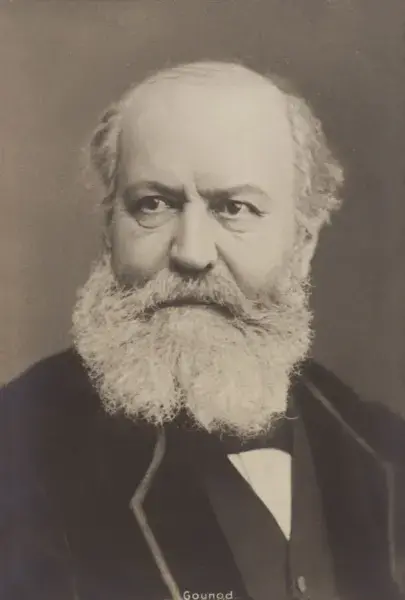
Philémon et Baucis premiered in 1860, just one year after Gounod’s dark, demonic, and career-defining masterpiece, Faust. This new work was a deliberate and dramatic change of pace. After the sprawling, Gothic tragedy of Goethe's legend, Gounod and his trusted librettists, Jules Barbier and Michel Carré, turned to the classical world for a story of warmth, charm, and sentiment. The opera was an opéra comique, a more intimate genre with spoken dialogue that was perfectly suited to the gentle, human scale of the myth. While Faust was a work of grand passions and damnation, Philémon et Baucis was a lyrical idyll, showcasing Gounod's gift for grace, elegance, and tender melody.
A Narrative in Miniature The Overture's Structure
The Overture is a wonderfully concise piece of programmatic storytelling, painting a picture of the entire myth in just a few minutes. It opens with a short but turbulent introduction (Andante). Agitated strings and powerful brass chords depict the anger of Jupiter at the wickedness of humanity and the great storm and flood he unleashes upon the world. This dramatic outburst quickly subsides, giving way to the overture’s most famous and beautiful passage: a serene and lyrical solo for the cello. This hymn-like melody, full of warmth and simple dignity, is the voice of Philémon and Baucis, a musical representation of their unwavering piety and the peace of their humble home. The main body of the overture is a graceful Allegretto, a pastoral dance with a charming, almost rustic main theme. This music evokes the simple, happy life of the couple and the calm that is restored to the world after the flood. The work concludes with a quiet, peaceful coda, a final musical blessing that reflects the serenity of the couple’s divine reward.
The Libretto's Alterations From Myth to Stage
For the operatic stage, Barbier and Carré made a few significant alterations to Ovid’s story. Most notably, they transformed Philémon and Baucis from a poor elderly couple into a virtuous young couple, presumably to make their love story more conventionally appealing to a 19th-century audience. They also added a comic subplot involving a sassy, irreverent neighbor named Arcas, which provides a lighthearted contrast to the main story’s piety. These changes, while understandable for the theatre, do slightly alter the gentle, autumnal feel of the original myth.
A Forgotten Gem The Opera's Fate
Philémon et Baucis was reasonably successful in its day and was praised by critics for its charm and the quality of its melodies. However, it has been completely and utterly eclipsed by Gounod’s two grand masterpieces, Faust (1859) and Roméo et Juliette (1867). While the full opera is now a rarity, the beautiful Overture has maintained a foothold in the concert repertoire. It is cherished by cellists for its gorgeous solo and appreciated by audiences for its warmth and elegance. It serves as a lovely reminder of a different side of Gounod's musical personality.
Gounod's Lyrical Gift The Heart of the Music
Ultimately, the enduring appeal of the Overture rests on what was always Gounod’s greatest strength: his supreme gift as a melodist. He was one of the 19th century's most natural and graceful tune writers, and this work is a perfect example of his art. The famous cello solo is a masterpiece of lyrical expression, a melody of such simple, heartfelt beauty that it could stand as the composer’s signature. Even in a work as grand as Faust, it is the intimate, lyrical moments that are often the most memorable. In the Overture to Philémon et Baucis, we hear that lyrical heart, pure and simple.