Your Request is under process, Please wait.

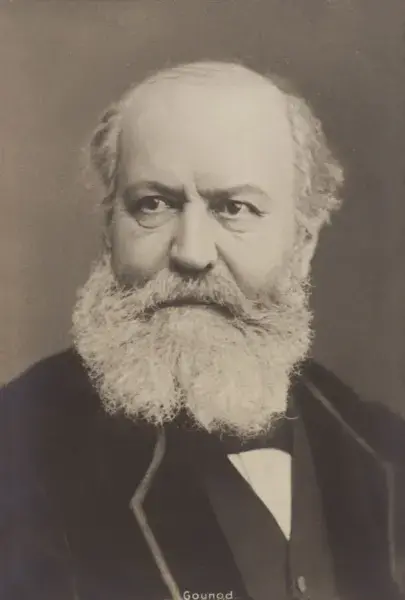
The brilliant and energetic Ballet Music from Charles Gounod’s opera Faust is one of the most famous and successful examples of a curious 19th-century operatic tradition. This suite of dances was not part of Gounod’s original 1859 version of the opera. It was added ten years later, in 1869, when the opera was revised for a new production at the prestigious Paris Opéra. At the time, that institution had an ironclad rule: to satisfy its wealthy, powerful subscribers, every five-act grand opera had to include a lavish ballet. Gounod, a practical man of the theatre, dutifully
...A Devilishly Good Dance
The story behind the creation of the Faust ballet music is a fascinating window into the culture of 19th-century Paris. When Gounod’s Faust was chosen for a new, lavish production at the Paris Opéra in 1869, the composer had to make significant revisions. His original 1859 work was an opéra comique, with spoken dialogue. For the Opéra, he replaced the dialogue with sung recitatives and, most importantly, composed a brand new, extensive ballet. This was not an artistic choice, but a commercial necessity. The Paris Opéra's most powerful patrons were the members of the aristocratic Jockey Club. These wealthy young men would typically dine late, socialize, and arrive at the theatre only in time for the second act, specifically to admire their favorite ballerinas (who were often their mistresses). Any composer, no matter how famous, who failed to include a ballet, or who dared to place it in an inconvenient act, risked having his opera loudly booed and shouted down by the Jockey Club. Composers like Verdi and Wagner famously ran afoul of this tradition, but Gounod wisely gave the patrons exactly what they wanted.
The Scene: A Demonic Bacchanal Walpurgis Night
Gounod and his librettists cleverly inserted the ballet at a point in the opera where a grand diversion makes dramatic, if not logical, sense. In the final act, Faust is consumed with guilt and remorse for having seduced and abandoned Marguerite. To distract him, his demonic companion Mephistopheles transports him to the Brocken mountain in Germany for the Walpurgis Night festival, a legendary witches' sabbath. Here, Mephistopheles conjures a vision of the most beautiful and notorious women of history to entertain Faust. The ballet is this vision, a hedonistic and exotic pageant of queens and courtesans.
A Suite of Seven Dances A Tour of the Ballet
The ballet music is a continuous suite of seven distinct and brilliantly orchestrated dances, each with its own character. 1. Les Nubiennes (Valse): The ballet opens not with a frenzy, but with a graceful and slightly exotic waltz, representing the Nubian slave girls. It is a piece of flowing elegance and charm. 2. Adagio: This is a slow, lyrical, and sensuous dance. It is a moment of pure, melodic beauty, often featuring an expressive solo for the cello, meant to represent the legendary beauties of the ancient world. 3. Danse antique (Allegretto): A complete change of pace, this is a more restrained and stately dance in an archaic, classical style, perhaps representing a more formal courtly entertainment. 4. Variations de Cléopâtre: A glittering and virtuosic variation for the lead ballerina, portraying Cleopatra. The music is brilliant and sparkling, often highlighted by the piccolo and triangle. 5. Les Troyennes: This is a grand and majestic dance, a stately procession meant to depict Helen of Troy and her Trojan court. The music is noble and heroic in character. 6. Variations du miroir: A delicate and charming variation for another female soloist, featuring a prominent and beautiful flute solo. It is a moment of graceful, almost fragile beauty. 7. Danse de Phryné: The suite concludes with a wild and frenzied bacchanale. Representing the famous Greek courtesan Phryne, the music is a high-energy, can-can-like gallop that builds in speed and intensity, bringing the ballet to an explosive and thrilling conclusion.
Gounod's Orchestral Brilliance A Master of Color
Charles Gounod was a master of melody and orchestral color, and the Faust ballet is a testament to his skill. The suite is a showcase for the full symphony orchestra. His writing for the woodwinds is particularly deft, with beautiful solos for the flute, oboe, and clarinet throughout. The harp adds a touch of magical glitter to the texture. The string section is called upon to play both lyrical, singing melodies and brilliant, energetic passagework. The brass and percussion are used to great effect in the grander and more frenzied dances, providing power and excitement. The entire suite is a feast of instrumental color, which has made it a favorite for showcasing the virtuosity of a modern orchestra.
A Life on the Concert Stage From the Opera House to the Symphony Hall
Like the famous orchestral suites from Bizet's Carmen, the Faust ballet music quickly escaped the confines of the opera house to become a smash hit on the concert stage. Its sequence of varied, tuneful, and brilliantly orchestrated dances makes for a perfect, self-contained concert piece. For many, the music is far more familiar from symphony "pops" concerts or recordings than it is from its original context within the five-hour opera. Its success is a testament to the sheer quality of Gounod's inspiration. Tasked with writing a purely functional piece of entertainment, he produced a work of enduring charm and brilliance.

Follow us : 


Sheet Music International - Copyright 2025 all rights reserved
| English: Sheet Music (PDF) | Free Scores | Français: Partitions (PDF) | Musique gratuite | Ελληνικά: Παρτιτούρες (PDF) | Δωρεάν μουσική |
| Deutsch: Noten (PDF) | Kostenlose Partituren | Español: Partituras (PDF) | Música impresa | Português: Partituras (PDF) | Música gratuita |
| Italiano: Spartiti (PDF) | Partiture musicali | Русский: Ноты (PDF) | Бесплатные партитуры | Norsk: Noter (PDF) | Gratis noter |
| Українська: Ноти (PDF) | Безкоштовні партитури | Polski: Nuty (PDF) | Darmowe nuty | Nederlands: Bladmuziek (PDF) | Gratis partituren |