Your Request is under process, Please wait.

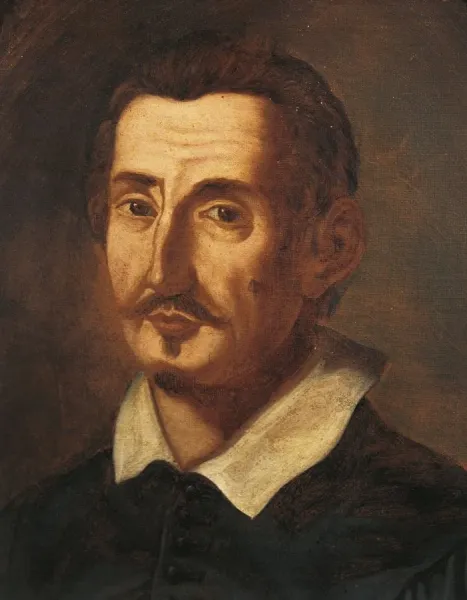
Girolamo Frescobaldi (1583-1643)
Download free sheet music from Girolamo Frescobaldi.
Discover the revolutionary keyboard music of Girolamo Frescobaldi, the first great master of the Baroque era and one of the most influential composers in history. As the celebrated organist of St. Peter's Basilica in Rome, Frescobaldi pioneered an expressive, dramatic, and virtuosic style that shaped the course of music for centuries. We offer high-quality, printable PDF scores of his groundbreaking works, from fiery toccatas to intricate ricercars. Perfect for organists, harpsichordists, and pianists, our collection provides direct access to the repertoire of a true genius. Download your free scores today
...The Architect of the Baroque Keyboard
In 1714, nearly a century after it was published, a young German composer named Johann Sebastian Bach took the time to meticulously hand-copy a collection of liturgical organ music by an Italian master. That collection was Fiori musicali ("Musical Flowers"), and its composer was Girolamo Frescobaldi. The fact that Bach, the culminating genius of the Baroque, studied Frescobaldi so intently reveals a profound truth: Frescobaldi was not just another composer; he was a foundational architect of the entire Baroque keyboard tradition. As the organist at St. Peter's Basilica, he was the most famous keyboard player of his day, an innovator whose dramatic and passionate style was so powerful that its influence flowed directly through his students to the great German masters, ultimately shaping the musical language of Bach himself.
The Ferrarese Foundation
Girolamo Frescobaldi was born in Ferrara, Italy, in 1583. In the late 16th century, Ferrara was a vibrant cultural hub under the rule of the arts-loving Este family. The court was renowned for its avant-garde musical scene, pushing the boundaries of expression and virtuosity. Frescobaldi grew up in this fertile environment and was identified early as a child prodigy. He studied with Luzzasco Luzzaschi, the esteemed court organist and a master of the complex, expressive madrigal. From Luzzaschi, Frescobaldi learned not only the rigorous craft of counterpoint but also the art of conveying intense emotion through music—a principle that would become the hallmark of his own revolutionary style.
Rome and the Path to St. Peter's
As a young man, Frescobaldi was drawn to Rome, the magnetic center of the Catholic world and a city of immense artistic patronage. After securing an early post as organist at the church of Santa Maria in Trastevere, his ambition and talent led him abroad. In 1607, he traveled to Flanders in the entourage of a powerful church diplomat, Guido Bentivoglio. This journey was crucial, exposing him to different musical traditions and allowing him to publish his first work, a book of madrigals, in Antwerp in 1608.
However, his destiny lay in Rome. Upon returning, he secured, at the young age of 25, the most prestigious organist position in all of Christendom: principal organist of St. Peter's Basilica. His fame was such that his inaugural performance reportedly drew a crowd of 30,000 people. While likely an exaggeration, the legend speaks to the electric reputation he already commanded. For the next thirty-five years, with one significant interruption, the magnificent domes of St. Peter's would resound with his innovative and awe-inspiring improvisations.
The Master of the Keyboard
Frescobaldi’s music was revolutionary. He cultivated a highly emotional, personal, and almost improvisational style known as the stylus phantasticus ("the fantastic style"). His music is filled with dramatic contrasts: fiery, virtuosic passages give way to solemn, contemplative moments; complex, learned counterpoint is juxtaposed with free, declamatory gestures. He was one of the first composers to develop a truly idiomatic language for keyboard instruments, harnessing the unique capabilities of the organ and harpsichord.
He perfected and defined the key genres of the early Baroque:
The Toccata: A "touch piece" designed to sound like a brilliant improvisation, featuring rapid scale passages, dramatic dissonances, and sudden changes in tempo and mood.
The Ricercar and Fugue: A strict, imitative contrapuntal work that was the direct ancestor of the fugue. Frescobaldi often paired a free Toccata with a strict Ricercar, a practice that would evolve into the Toccata and Fugue form perfected by Bach.
The Partita: A set of variations over a repeating bass line or harmonic pattern, showcasing his endless melodic and rhythmic invention.
Fiori musicali (1635): This "Musical Flowers" collection contains three organ Masses and is considered a monument of liturgical music. It provides music for the entirety of the Mass service and is a masterclass in contrapuntal writing, modal harmony, and spiritual depth. It was this work that Bach so carefully studied.
Florence and the Medici Court
Frescobaldi's fame was so great that even his post at St. Peter's could not hold him indefinitely. From 1628 to 1634, he took a leave of absence to accept an offer from one of Italy's other great powers: the Medici family. He served as the court organist to the Grand Duke of Tuscany in Florence. This six-year sojourn in the cradle of the Renaissance further cemented his status as the most sought-after keyboard player in Italy, a musician prized by both popes and princes.
The Teacher of Europe
Beyond his compositions, Frescobaldi's most profound influence came through his teaching. Students from all over Europe flocked to Rome to learn from the master. The most important of these was Johann Jakob Froberger, a German composer and organist in the service of the Holy Roman Emperor in Vienna. The emperor sent Froberger to study with Frescobaldi for three years. Froberger absorbed his teacher’s style completely—the dramatic flair of the toccata, the learned counterpoint of the ricercar, and the expressive depth of his harmony.
Froberger then returned to the German-speaking world and became a pivotal figure in his own right, effectively transplanting Frescobaldi's Italian innovations into German soil. Through Froberger's work and teaching, the Frescobaldian style was passed down to the next generation of German organ masters, including Dietrich Buxtehude, Johann Pachelbel, and Georg Muffat. This created a direct, unbroken lineage of influence: Frescobaldi taught Froberger, whose style profoundly shaped Buxtehude, who in turn was the single greatest influence on the young J.S. Bach.
Final Years and Enduring Influence
Frescobaldi returned to his post at St. Peter's in 1634, where he remained for the rest of his life. He died in Rome on March 1, 1643, and was buried in the church of Santi Apostoli. He left behind a legacy that defined the musical language of his era. He was the first composer to think of instrumental music in a truly modern sense: as a vehicle for dramatic, personal, and virtuosic expression. He codified the forms, developed the techniques, and wrote the masterpieces that would become the foundation for the entire glorious tradition of Baroque keyboard music.
Apel, Willi. The History of Keyboard Music to 1700. Indiana University Press, 1972.
Bukofzer, Manfred F. Music in the Baroque Era: From Monteverdi to Bach. W. W. Norton & Company, 1947.
Hammond, Frederick. Girolamo Frescobaldi. Harvard University Press, 1983.
Silbiger, Alexander. "Frescobaldi, Girolamo Alessandro." Grove Music Online. Oxford University Press, 2001.
Follow us : 


Sheet Music International - Copyright 2026 all rights reserved
| English: Sheet Music (PDF) | Free Scores | French: Sheet Music (PDF) | Free Scores | Greek: Sheet Music (PDF) | Free Scores |
| German: Sheet Music (PDF) | Free Scores | Spanish: Sheet Music (PDF) | Free Scores | Portuguese: Sheet Music (PDF) | Free Scores |
| Italian: Sheet Music (PDF) | Free Scores | Russian: Sheet Music (PDF) | Free Scores | Norwegian: Sheet Music (PDF) | Free Scores |
| Ukrainian: Sheet Music (PDF) | Free Scores | Polish: Sheet Music (PDF) | Free Scores | Dutch: Sheet Music (PDF) | Free Scores |