Your Request is under process, Please wait.

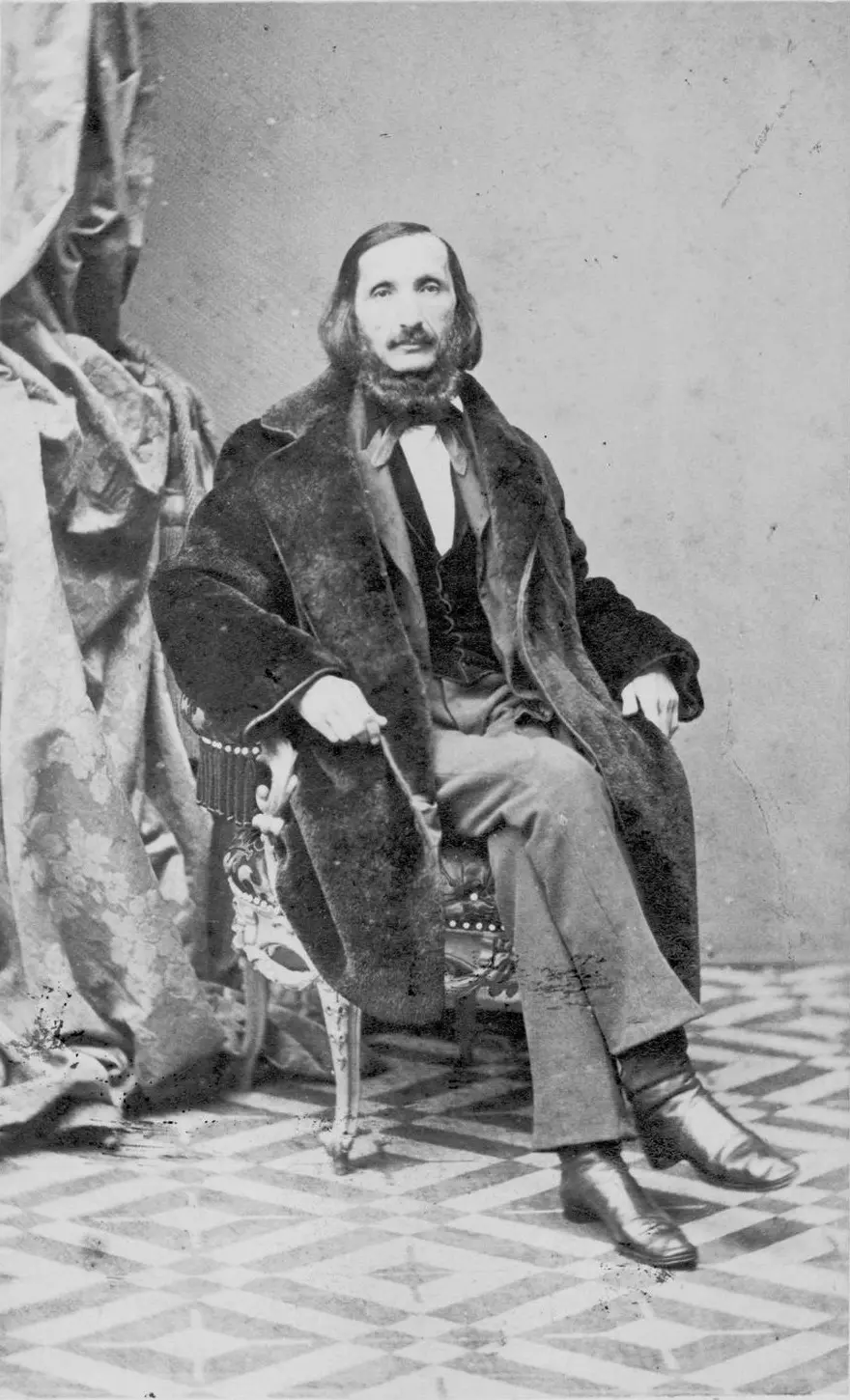
Heinrich Wilhelm Ernst (1814-1865)
Download free sheet music from Heinrich Wilhelm Ernst.
Challenge yourself with the breathtakingly difficult and musically profound works of Heinrich Wilhelm Ernst, the violinist who inherited the mantle of Niccolò Paganini. We offer high-quality, printable PDF scores of his legendary compositions, designed for the advanced violinist seeking the ultimate technical and artistic test. Explore his masterpieces, from the fiendishly complex Grand Caprice on Schubert's "Der Erlkönig" to the groundbreaking Six Polyphonic Studies, including the famous variations on "The Last Rose of Summer." These scores provide a clear and accessible gateway to the repertoire
...The Virtuoso Who Chased a Ghost:
The Legend of Heinrich Wilhelm Ernst
In the spring of 1828, a young violin prodigy named Heinrich Wilhelm Ernst sat in a Vienna concert hall and witnessed a performance that would alter the course of his life. On stage was the electrifying, demonic figure of Niccolò Paganini, a man who seemed to have made a pact with the devil to unlock impossible sounds from his instrument. For Ernst, it was a revelation and the beginning of an obsession. He resolved not only to emulate Paganini but to understand and master his secrets. This quest would lead him on a years-long chase across Europe, drive him to the highest echelons of virtuosity, and establish him as the only violinist of his generation considered a true rival and successor to the ghost he so relentlessly pursued.
Early Life and Viennese Beginnings
Heinrich Wilhelm Ernst was born into a Jewish family in Brno, Moravia (now in the Czech Republic) on May 8, 1814. A child prodigy of immense talent, he began his violin studies at the age of nine and was soon admitted to the prestigious Vienna Conservatory. There, he became a student of Joseph Böhm, a master of the classical Viennese violin school. He also studied composition with Ignaz von Seyfried. Ernst excelled, quickly mastering the foundational techniques and musical sensibilities of his teachers. By his teenage years, he was already a polished and formidable performer, but his artistic path was about to be irrevocably changed.
The Paganini Obsession
When Paganini arrived in Vienna for his sensational debut, the musical world was turned upside down. His superhuman technique—blazing runs, ricochet bowing, left-hand pizzicato, and unheard-of feats with harmonics and double stops—was unlike anything seen before. While many were simply mesmerized, Ernst was galvanized. He attended every one of Paganini's fourteen concerts in Vienna, committing the performances to his prodigious memory. Dissatisfied with mere imitation, he craved the source code of Paganini’s magic.
What followed is the stuff of legend. When Paganini left Vienna, the young Ernst, against the wishes of the Conservatory, followed him. For years, he shadowed the Italian maestro across Europe, a musical detective on the trail of genius. He reportedly booked rooms in the same hotels, listening through walls and transcribing the secret practice sessions. In one famous anecdote, Ernst performed Paganini’s fiendishly difficult Nel cor più non mi sento variations for the master himself, having learned them entirely by ear. Paganini was reportedly impressed, if slightly unnerved, by the young man's dedication. This period of intense study and deconstruction allowed Ernst to internalize Paganini's technical innovations and make them his own.
Forging a Legend in Paris
After his nomadic apprenticeship, Ernst settled in Paris in the 1830s, the artistic epicenter of Romantic Europe. There, he joined a circle of the era's greatest musicians, becoming a close friend and respected colleague of Frédéric Chopin, Franz Liszt, Hector Berlioz, and Felix Mendelssohn. This environment was crucial for his development from a mere virtuoso into a complete artist. While he had absorbed Paganini's technique, he began to infuse it with a greater depth of tone, a more profound musicality, and a warmer, more Romantic sensibility.
It was during this time that he established his own unique voice as both a performer and composer. He became particularly known for his mastery of polyphony—the art of playing multiple independent melodic lines simultaneously on the violin. While Paganini’s effects were often dazzlingly theatrical, Ernst’s polyphonic writing was a feat of deep musical engineering, creating rich, complex textures that were previously unthinkable on a solo string instrument. His reputation grew to the point where critics and audiences began to debate who was the superior player. Berlioz, a keen observer, noted that while Paganini was perhaps more astonishing, Ernst was often more moving and musically satisfying.
The Composer of the Impossible
Ernst’s compositions are a direct reflection of his technical and artistic philosophy. They are designed to push the violin to its absolute physical limits while still serving a profound musical purpose.
His most iconic work is the Grand Caprice on Schubert's "Der Erlkönig," Op. 26. In this staggering feat of transcription, Ernst takes Franz Schubert's dramatic Lied—a song with four distinct characters (the Narrator, the frantic Father, the dying Son, and the seductive Elf King) plus a relentless, galloping piano accompaniment—and recreates the entire drama on a single violin. Through clever use of polyphony, varied registers, tremolos, and arpeggios, he assigns a unique voice and texture to each character, turning the solo violin into a miniature opera company. It remains one of the most difficult pieces ever written for the instrument.
Equally important are his Six Polyphonic Studies, which codify his innovations in multi-voiced playing. The final study, a set of variations on the Irish air "The Last Rose of Summer," is his other calling card. In it, he combines a soaring, bowed melody in the upper voice with an intricate, plucked accompaniment played simultaneously by the fingers of the same left hand (left-hand pizzicato). The effect is mesmerizing, as if two players are performing at once. It was a favorite piece of the legendary violinist Joseph Joachim, who considered Ernst the greatest violinist of his time.
Triumph and Tragedy
Ernst spent decades as one of the most sought-after concert artists in Europe, touring relentlessly from London to St. Petersburg. He was a founder of the Beethoven Quartet Society in London and was universally admired for his artistic integrity. However, the immense physical and mental strain of his career took a devastating toll. In the mid-1850s, he began to suffer from a severe neurological ailment, likely neuralgia or gout, which caused him excruciating pain.
Tragically, the man who had mastered the most complex physical demands of his instrument was betrayed by his own body. The illness progressed until he could no longer play. He spent his final years in Nice, a revered but silent figure, cared for by friends like Berlioz. Heinrich Wilhelm Ernst died on October 8, 1865, leaving behind a legacy of violin playing that pushed the boundaries of the possible and a small but monumental body of work that continues to test the mettle of every virtuoso who dares to approach it.
Campbell, Margaret. The Great Violinists. Robson Books, 2004.
Petheram, Mark. "Heinrich Wilhelm Ernst: A Guide to Research." The Galpin Society Journal, Vol. 60, 2007, pp. 209-216.
Roth, Henry. Violin Virtuosos: From Paganini to the 21st Century. California Classics Books, 1997.
Rowe, Mark W. Heinrich Wilhelm Ernst: Virtuoso Violinist. Ashgate Publishing, 2008.
Follow us : 


Sheet Music International - Copyright 2026 all rights reserved
| English: Sheet Music (PDF) | Free Scores | French: Sheet Music (PDF) | Free Scores | Greek: Sheet Music (PDF) | Free Scores |
| German: Sheet Music (PDF) | Free Scores | Spanish: Sheet Music (PDF) | Free Scores | Portuguese: Sheet Music (PDF) | Free Scores |
| Italian: Sheet Music (PDF) | Free Scores | Russian: Sheet Music (PDF) | Free Scores | Norwegian: Sheet Music (PDF) | Free Scores |
| Ukrainian: Sheet Music (PDF) | Free Scores | Polish: Sheet Music (PDF) | Free Scores | Dutch: Sheet Music (PDF) | Free Scores |