Your Request is under process, Please wait.

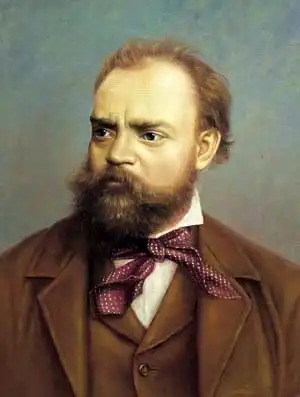
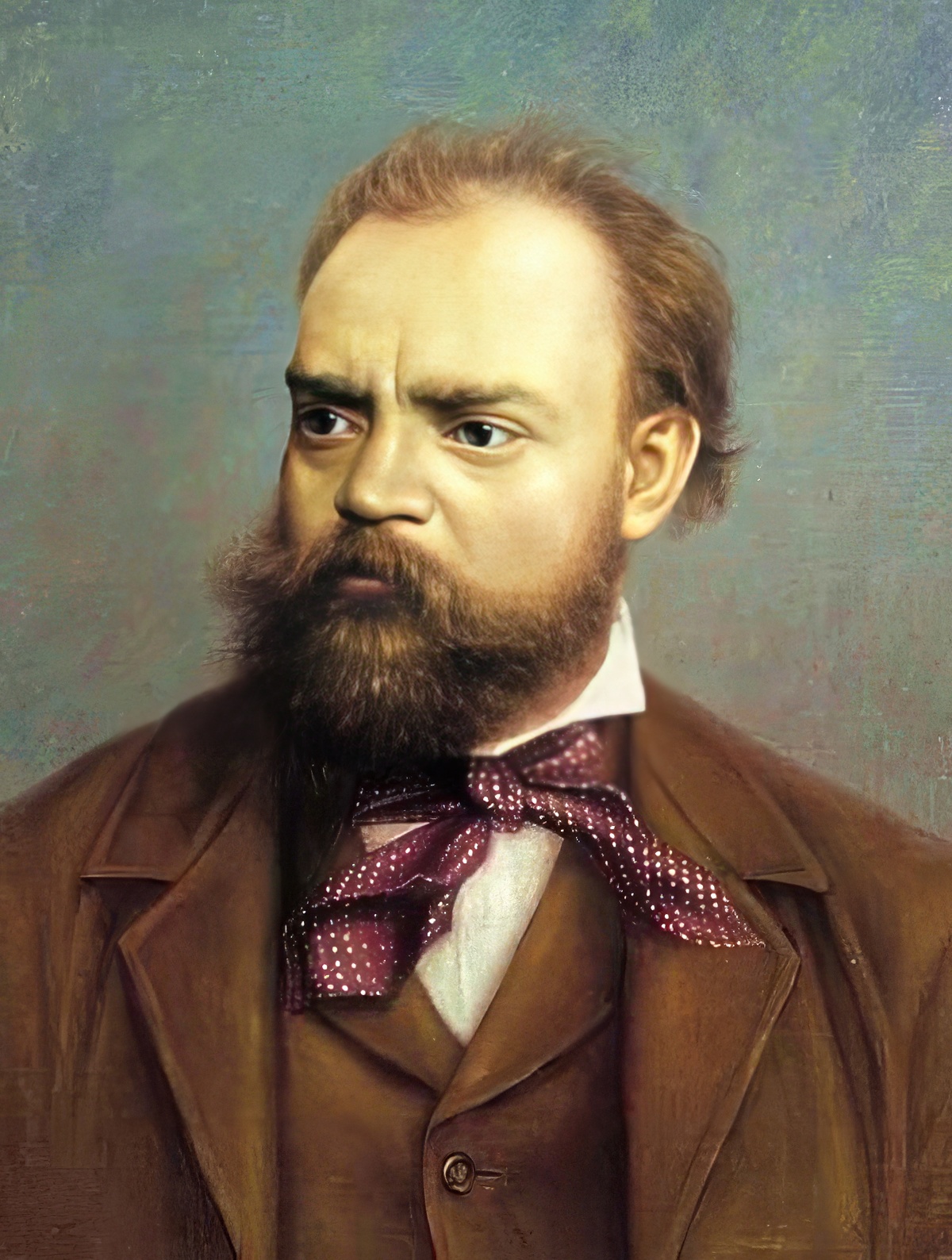
Antonín Dvořák (1841-1904)
Antonín Dvořák's Symphony No. 9 in E minor, "From the New World," is not just a cornerstone of the orchestral repertoire; it is a musical love letter from an old world to a new one. Composed in 1893 during the Czech composer's famous tenure as Director of the National Conservatory of Music in New York, the symphony is a masterful blend of two distinct sound worlds. On one hand, it is a perfectly crafted European symphony in the tradition of Brahms and Beethoven,
A Bohemian's Postcard from America
In the autumn of 1892, Antonín Dvořák, the celebrated Czech composer who had risen from humble beginnings as a butcher's son to international fame, arrived in New York City to take up a post that must have seemed fantastical to him: Director of the National Conservatory of Music of America. He was offered a staggering salary by the visionary philanthropist Jeannette Thurber, who had a patriotic mission for him. She wanted Dvořák to help American composers find their own unique, national voice, just as he had done for his native Bohemia. Dvořák took this mission to heart. He famously declared that the future of American music would be found in "the Negro melodies, the songs of the plantations," and in the music of the Native Americans. He immersed himself in this new sonic world, listening intently to the spirituals sung by his student Harry T. Burleigh and poring over Henry Wadsworth Longfellow's epic poem, "The Song of Hiawatha. " The magnificent result of this cultural immersion was his Symphony No. 9, a work written in America but filled with a profound longing for his distant home—a musical postcard sent "From the New World. "
The "American" Sound and the Spirit of Folk Music
A debate has long surrounded the symphony regarding its use of folk sources. Are the famous melodies direct quotes of spirituals or Native American songs? Dvořák himself was clear on this point: they are not. He wrote, "I have simply written original themes embodying the peculiarities of the Indian music. " He was a musical sponge, absorbing the spirit and the essential grammar of this music and using it to create something entirely new. The "American" sound of the symphony comes from his brilliant adoption of specific musical traits. He frequently uses pentatonic scales (five-note scales common in folk music worldwide), which give melodies an open, spacious quality. He employs syncopation and flattened "blue" notes, particularly the lowered seventh degree of the scale, which were characteristic of the spirituals he heard. Structurally, the symphony remains a thoroughly European work, but its melodic and rhythmic heart was profoundly shaped by his American sojourn.
Movement I: Adagio – Allegro molto
The symphony begins with a slow, searching introduction, creating a mood of hushed anticipation and perhaps a touch of homesickness. This Adagio builds tension before a sudden fortissimo chord unleashes the main Allegro molto. The first theme, a bold, rising arpeggio announced by the horns, serves as a primary motto for the entire symphony. This is followed by a darker, dance-like theme in G minor, introduced by the flutes and oboes, whose rhythm is often compared to the spiritual "Swing Low, Sweet Chariot. " The third principal theme, presented by a solo flute in G major, is a lyrical, cheerful melody that seems to evoke the wide-open spaces of the American prairie. Dvořák develops these themes with incredible skill within a traditional sonata form, but it is the raw melodic power and rhythmic vitality that leaves the most lasting impression.
Movement II: Largo
This movement is the emotional core of the symphony and contains one of the most beloved melodies ever composed. A solemn, chorale-like progression of chords in the brass and woodwinds sets a reverent, almost funereal, scene. From this emerges the famous, heart-wrenching melody played by the English horn. It is a song of profound nostalgia and deep longing, a perfect musical expression of the feeling of "homesickness. " While Dvořák may have been inspired by a scene from "Hiawatha" depicting a funeral in the forest, the tune became world-famous as the spiritual "Goin' Home," for which lyrics were later added by his student William Arms Fisher. The tranquil mood is interrupted by a more agitated middle section before the main theme returns, eventually fading away with a sense of peaceful resignation. The movement closes with haunting recollections of themes from the first movement, a technique known as cyclic form.
Movement III: Scherzo: Molto vivace
After the deep introspection of the Largo, the Scherzo bursts forth with ferocious, rhythmic energy. Dvořák noted that this movement was inspired by the wedding feast scene in "Hiawatha," with its "dance of Pau-Puk-Keewis. " The music is athletic and percussive, with stamping rhythms and a wildly colorful orchestration that includes the bright clang of the triangle. This propulsive main section gives way to a contrasting trio. Here, the music’s character shifts entirely; the melody in the flute and oboe is a graceful, charming folk dance that sounds far more like the rolling hills of Bohemia than the plains of America. It is a moment where Dvořák the Czech patriot seems to peek through his American facade. Just before the Scherzo’s thunderous return, Dvořák masterfully re-introduces the heroic horn motto from the first movement, further weaving the symphony’s thematic threads together.
Movement IV: Allegro con fuoco
The finale, marked "with fire," is a magnificent and dramatic conclusion that summarizes the entire work. It begins with a powerful, march-like theme in E minor, announced by the horns and trumpets over churning strings. This movement is a masterclass in thematic integration. Dvořák not only develops the new themes of the finale but also brings back thematic material from all three preceding movements. The main theme of the first movement, the soulful Largo melody, and the fiery Scherzo theme all reappear, colliding and combining in a brilliant contrapuntal web. The symphony drives towards a monumental climax where the finale's march and the first movement's motto are stated together in glorious E major. Yet, the work does not end in a triumphant blaze. Instead, the music gradually dies away, with a final, long-held chord in the winds and brass that fades into a mysterious and unforgettable silence.
A Symphony United by Memory
One of the key architectural features of the "New World" Symphony is its pervasive use of cyclic form. While many composers, including Berlioz and Liszt, had used recurring themes, Dvořák employs the technique here with extraordinary thoroughness. The main motto from the first movement, in particular, acts as a recurring memory that appears in every subsequent movement. This device does more than simply unify the work; it creates a powerful narrative arc. It suggests a journey where the memories of past experiences—the heroic striving of the first movement, the deep nostalgia of the second, the wild dancing of the third—all coalesce to inform the dramatic conclusion. It makes the entire forty-minute symphony feel like a single, epic remembrance.
Follow us : 


Sheet Music International - Copyright 2026 all rights reserved
| English: Sheet Music (PDF) | Free Scores | French: Sheet Music (PDF) | Free Scores | Greek: Sheet Music (PDF) | Free Scores |
| German: Sheet Music (PDF) | Free Scores | Spanish: Sheet Music (PDF) | Free Scores | Portuguese: Sheet Music (PDF) | Free Scores |
| Italian: Sheet Music (PDF) | Free Scores | Russian: Sheet Music (PDF) | Free Scores | Norwegian: Sheet Music (PDF) | Free Scores |
| Ukrainian: Sheet Music (PDF) | Free Scores | Polish: Sheet Music (PDF) | Free Scores | Dutch: Sheet Music (PDF) | Free Scores |