Your Request is under process, Please wait.

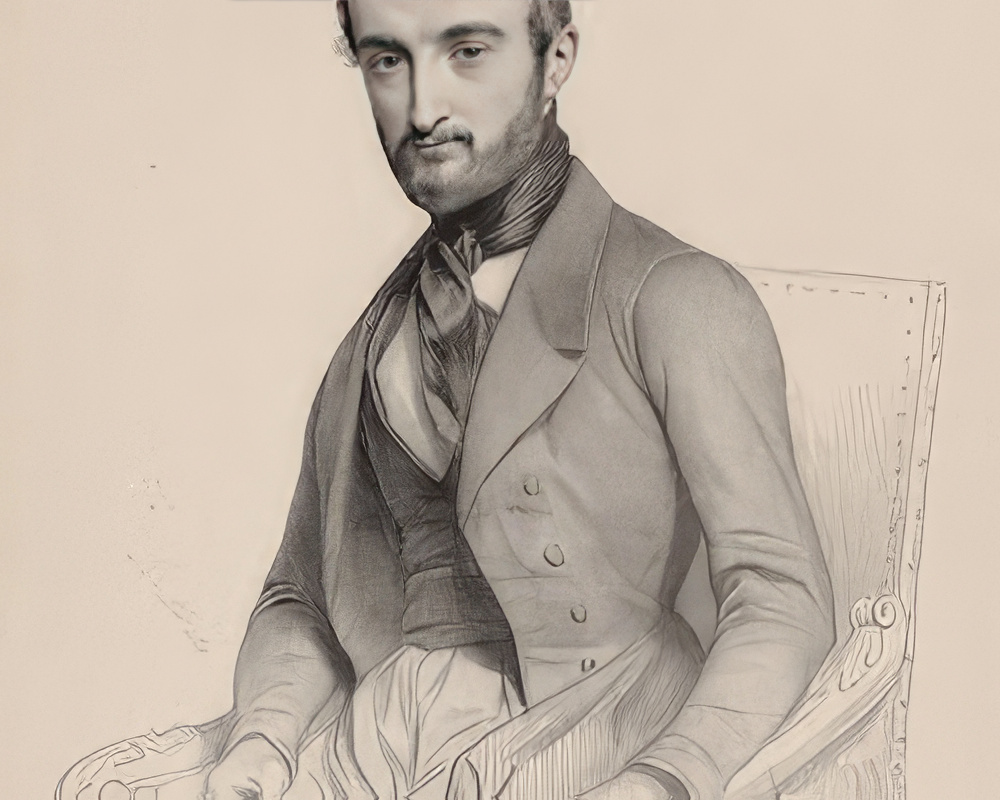
Charles Dancla (1817-1907)
Download free sheet music from Charles Dancla.
Discover the elegant and essential music of Charles Dancla, a master violinist and one of the most important pedagogues of the 19th-century French school. As a celebrated professor at the Paris Conservatoire for over 35 years, Dancla dedicated his compositional career to the art of teaching. His works, from the brilliant Airs variés on popular opera themes to his indispensable sets of etudes, are masterfully designed to develop technique while delighting the ear. Explore the repertoire of this foundational teacher, a staple for violin students worldwide, with our library of
...The Last Great Classicist of the French Violin School
In the glittering, star-studded world of 19th-century violin virtuosos, Charles Dancla was a figure of rare and enduring substance. He was a direct heir to the great classical tradition, a student of Pierre Baillot, who in turn was a disciple of the legendary Giovanni Battista Viotti, the father of modern violin playing. Dancla’s life was not a dramatic tale of demonic pacts like that of his contemporary Niccolò Paganini, nor was it a life of glamorous international tours like that of Henri Vieuxtemps. Instead, his was a story of quiet dedication, institutional loyalty, and a profound commitment to preserving and passing on the core principles of his art. As a leading professor at the Paris Conservatoire and concertmaster of the Paris Opéra, he was a pillar of French musical life, but his most lasting legacy is the vast collection of pedagogical music he left behind—works so perfectly crafted that they have remained an essential part of violin education for over 150 years.
A Prodigy's Path to Paris
Jean Baptiste Charles Dancla was born in the south of France in 1817. He was an extraordinary prodigy. At the age of just nine, his talent was so obvious that he was taken to Paris to audition for the great violinist and composer Pierre Rode. Rode was so impressed that he gave the boy a letter of recommendation to Luigi Cherubini, the famously stern director of the Paris Conservatoire. Dancla was immediately admitted to the violin class of Pierre Baillot, one of the finest teachers in Europe and a staunch guardian of the classical French violin tradition.
The Paris Conservatoire at this time was the world’s leading institution for violin study. The French school, established by Viotti, Baillot, and Rodolphe Kreutzer (the dedicatee of Beethoven's famous sonata), emphasized elegance, purity of tone, a graceful and controlled bow arm, and a faithful adherence to the composer's intentions. It was a school of noble restraint, clarity, and precision. Dancla absorbed these principles completely. He was a brilliant student, winning the conservatory's coveted first prize in violin in 1833. He also studied composition with the renowned opera composer Fromental Halévy. While at the Conservatoire, he heard the electrifying Paris concerts of Niccolò Paganini, an experience that left a lasting impression on him, though his own artistic temperament would lead him down a very different path.
The Heart of Parisian Musical Life
Unlike many of his virtuosic contemporaries who embarked on extensive international tours, Dancla chose to build his career at the very center of French musical life: Paris. In 1835, at the age of just 17, he was hired as a principal violinist at the Paris Opéra, the most prestigious orchestra in the world. He would remain with the orchestra for over 28 years, eventually rising to the esteemed position of solo violon (concertmaster).
His tenure at the Opéra placed him at the heart of the Grand Opera movement. From his concertmaster’s chair, he would have led the premieres and countless performances of the era's greatest operatic spectacles, works by composers like Giacomo Meyerbeer, Fromental Halévy, and the young Charles Gounod. This long experience in the opera pit deeply influenced his compositional style. He developed a keen sense of vocal lyricism and a flair for the dramatic, qualities that he would masterfully translate to the violin in his own works. He was also a celebrated chamber musician, founding the successful Dancla Quartet and promoting the late string quartets of Beethoven. He was a complete musician, respected not just for his technical skill but for his deep and comprehensive artistry.
The Master Pedagogue
While his orchestral and chamber music careers were distinguished, Dancla’s true calling was pedagogy. In 1857, he was appointed professor of violin at the Paris Conservatoire, the institution that had shaped him. He would hold this post for over 35 years, becoming one of its most respected and influential teachers. It was for his students at the Conservatoire that he began to compose the vast body of instructional works for which he is now almost exclusively remembered.
Dancla was a pragmatist and a brilliant educator. He understood that students needed more than just dry, mechanical exercises to develop their skills. His genius was in creating etudes and concert pieces that targeted specific technical challenges while being genuinely charming and musically satisfying. His most famous pedagogical works are his sets of etudes, such as the 20 Études brillantes et caractéristiques, Op. 73, and his École du Mécanisme (School of Mechanism). These studies help students master bowing techniques, left-hand facility, and intonation through music that is always elegant and tuneful.
His most popular works, however, were his many Airs variés. In these pieces, he would take a famous, beloved melody from a popular opera by composers like Rossini, Bellini, Donizetti, or Verdi, and write a series of brilliant and progressively difficult variations on it. These were the perfect teaching tools. They were musically familiar and appealing to students, and each variation was cleverly designed to isolate a specific technical problem—spiccato bowing, scales, arpeggios, harmonics, or double-stops. The six sets of Airs variés in his Opus 89, known as "Le mélodiste," became an indispensable part of the student repertoire.
The Last Great Classicist
Dancla composed over 150 works, almost all of them for his own instrument. In addition to his pedagogical music, he wrote string quartets, violin concertos, and numerous duos for two violins, which are still used for teaching sight-reading and ensemble playing. His style remained consistent throughout his long life. He was a classicist at heart, living through the height of the Romantic era. While he admired the passion of his contemporaries, his own music never strayed from the core principles of the French school: elegance, clarity, grace, and perfect proportion. He was not an innovator, but a consolidator and a preserver of a great tradition.
He lived an extraordinarily long life, retiring from the Conservatoire in 1892 and continuing to compose and publish his memoirs. He died in 1907 at the age of 89. By the time of his death, the musical world had been transformed by Wagner, Brahms, and Debussy, but the pedagogical foundation Dancla had laid remained as solid as ever. His works are not performed in the great concert halls today, but they are alive and well in the teaching studios and practice rooms of violinists all over the world, a testament to a long and dedicated life in service to the art of the violin.
Schwarz, Boris. Great Masters of the Violin. Simon & Schuster, 1983.
Stowell, Robin, ed. The Cambridge Companion to the Violin. Cambridge University Press, 1992.
Dubourg, George. The Violin: Some Account of That Leading Instrument and Its Most Eminent Professors. 1852. (A contemporary account).
Pougin, Arthur. "Charles Dancla: Sa vie, son oeuvre." Le Ménestrel, vol. 73, 1907. (Obituary and tribute, in French).
White, Chappell. "Dancla, (Jean Baptiste) Charles." Grove Music Online. Oxford University Press, 2001.
Follow us : 


Sheet Music International - Copyright 2026 all rights reserved
| English: Sheet Music (PDF) | Free Scores | French: Sheet Music (PDF) | Free Scores | Greek: Sheet Music (PDF) | Free Scores |
| German: Sheet Music (PDF) | Free Scores | Spanish: Sheet Music (PDF) | Free Scores | Portuguese: Sheet Music (PDF) | Free Scores |
| Italian: Sheet Music (PDF) | Free Scores | Russian: Sheet Music (PDF) | Free Scores | Norwegian: Sheet Music (PDF) | Free Scores |
| Ukrainian: Sheet Music (PDF) | Free Scores | Polish: Sheet Music (PDF) | Free Scores | Dutch: Sheet Music (PDF) | Free Scores |