An Armchair Tourist in the Highlands: Bruch's Scottish Fantasy
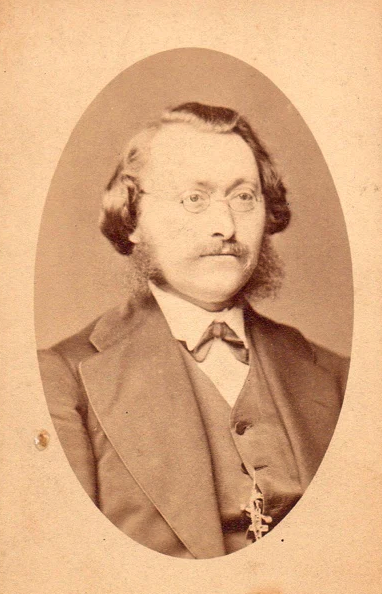
The great German composer Max Bruch was a man of many talents and, famously, a rather grumpy disposition. He spent much of his career lamenting the celebrity of his First Violin Concerto, which overshadowed his other works to a degree he found maddening. Yet, beyond his curmudgeonly exterior lived a musical imagination of extraordinary vividness—so vivid, in fact, that he could conjure the very soul of a nation he had never visited. Such is the case with his beloved Scottish Fantasy, Op. 46, a work that stands as one of
...
An Armchair Tourist in the Highlands: Bruch's Scottish Fantasy
The great German composer Max Bruch was a man of many talents and, famously, a rather grumpy disposition. He spent much of his career lamenting the celebrity of his First Violin Concerto, which overshadowed his other works to a degree he found maddening. Yet, beyond his curmudgeonly exterior lived a musical imagination of extraordinary vividness—so vivid, in fact, that he could conjure the very soul of a nation he had never visited. Such is the case with his beloved Scottish Fantasy, Op. 46, a work that stands as one of the most brilliant and heartfelt tributes to Scotland ever penned, composed by a man who never set foot on its shores.
This remarkable act of "musical second sight," as Bruch called it, was a point of pride for the composer. When asked about the source of his inspiration, he would simply state that his deep study of Scottish folk music was a far more enriching wellspring than any fleeting holiday. He meticulously researched the tunes he used in the Musiciens de l'Ecosse (Music of Scotland), a collection published in 1862 by Jean-Baptiste Weckerlin. From this source, he lovingly selected the authentic folk melodies that form the heart of this work, treating them not as mere quotations but as seeds for a grand, romantic vision.
Written in 1880 during a creatively fertile period when Bruch was living in Liverpool, the Fantasy is officially titled Fantasia for Violin with Orchestra and Harp, Freely Using Scottish Folk Melodies. The unusual scoring, which gives the harp a prominent, almost bardic role, immediately signals that this is no ordinary concerto. It is a four-movement symphonic poem with the violin as its heroic protagonist, guiding the listener through a series of evocative musical landscapes.
The work begins with a grave, almost epic introduction, a misty scene from which the mournful strains of "Auld Rob Morris" emerge. The violin sings this melancholy ballad with profound expression, the harp accompanying like an ancient storyteller plucking at his strings by a fire.
This somber mood is quickly dispelled by the second movement, a lively dance based on the cheerful fiddle tune "The Dusty Miller." Here, the violin sheds its sorrow for a display of rustic, rhythmic brilliance. This movement is pure energy and joy, a festive ceilidh brought to life with dazzling virtuosity.
A profound, lyrical beauty returns in the third movement, Andante sostenuto. The violin sings the achingly beautiful melody of "I'm A' Doun for Lack o' Johnnie," a love song of tender and heartfelt longing. Bruch's gift for sublime melody is on full display, creating a moment of breathtaking stillness and introspection.
The journey culminates in a Finale marked Allegro guerriero (warlike allegro). Using Scotland's great patriotic anthem, "Scots Wha Hae"—a tune Robert Burns set to the legendary march of Robert the Bruce's army at the Battle of Bannockburn—Bruch builds a movement of triumphant, heroic grandeur. The violin, now a warrior-bard, leads the orchestra in a blaze of national pride, full of fiery passagework and culminating in a powerful, affirmative conclusion.
Though dedicated to the great Spanish virtuoso Pablo de Sarasate, who premiered the work in Hamburg, the Scottish Fantasy is a testament to Bruch's unique genius. It is a work born not of travel, but of deep empathy and imagination—a vivid, romantic dream of a Scotland of misty glens, spirited dances, and heroic legends.