Symphony No. 3 in A minor, "Unfinished" (1887)
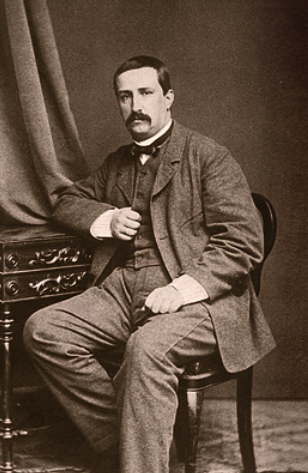
Alexander Borodin (1833-1887) Completed and orchestrated by Alexander Glazunov (1865-1936)
The history of music is filled with tantalizing “what ifs”—masterpieces left incomplete by the sudden death of their creators. We have Mozart’s Requiem, Schubert’s famous “Unfinished” Symphony, and Mahler’s Tenth. To this list we must add the charming and powerful Symphony No. 3 by Alexander Borodin, a work that exists today only because of an extraordinary act of musical memory and devotion.
To understand why this symphony was left unfinished, one must first understand its composer. Borodin was one of the great “Sunday composers.” By day, he was a world-renowned chemist and respected professor of medicine in St. Petersburg—a demanding career that he pursued with passion. Music was the great love he relegated to his evenings, weekends, and holidays. As a member of the group of Russian nationalist composers known as “The Mighty Handful,” he stood alongside Balakirev, Mussorgsky, and Rimsky-Korsakov, but his composing output was far smaller due to the immense pressures of his scientific work.
In 1887, Borodin was juggling two massive projects: his epic opera Prince Igor and his Third Symphony. On February 27, during a festive costume party at his home, the 53-year-old composer collapsed and died suddenly from a burst aneurysm. He left behind a trove of unfinished music, including sketches and ideas for the new symphony, but nothing was complete.
Enter Alexander Glazunov, a younger composer with a prodigious talent and a phenomenal musical memory. Glazunov, along with Nikolai Rimsky-Korsakov, took it upon himself to salvage his late friend’s work. Having heard Borodin play themes from the new symphony on the piano at social gatherings, Glazunov embarked on a remarkable task: to reconstruct the symphony from the scattered sketches and from his own memory of what he had heard. The result is the two-movement symphony we hear tonight.
I. Moderato assai – Allegro: The first movement is the greater act of reconstruction. Glazunov recalled the lyrical main theme and the heroic second theme from Borodin’s piano performances and fashioned a movement around them in the style of his late friend. He also skillfully incorporated a theme Borodin had originally intended for Prince Igor. The result is a movement that feels quintessentially Borodin—with its soaring melodies and distinctly Russian character—while being largely the structural handiwork of Glazunov. It is a brilliant and loving tribute.
II. Scherzo: Vivo: The second movement is the more authentically “Borodin” of the two. The composer had fully sketched out this music for piano, so Glazunov’s primary task was not composition, but orchestration. The music is a delight—a nimble and energetic dance in a quirky 5/8 time signature, which gives it a unique, limping rhythmic feel. A graceful, flowing trio section provides a brief moment of contrast before the spirited dance returns.
The symphony ends here. Borodin had no known sketches for a slow movement or a finale. What we are left with is not a complete work, but a precious and fascinating fragment. It is a testament to Borodin’s melodic genius and a monument to the friendship of Alexander Glazunov, who ensured that these brilliant musical ideas would not be lost to silence.