Your Request is under process, Please wait.

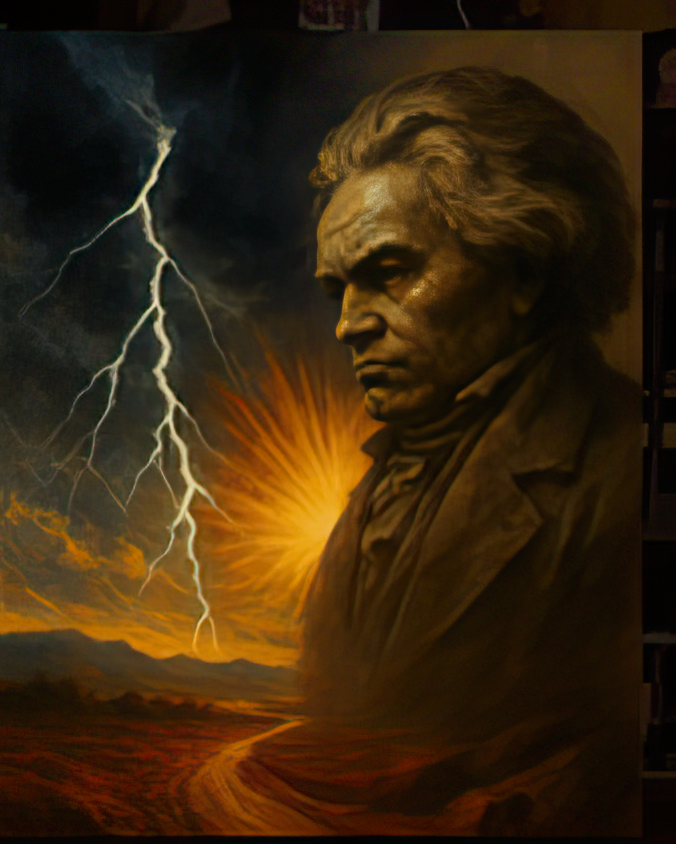
The sixteen string quartets of Ludwig van Beethoven represent one of the supreme achievements in the history of Western music. Alongside his nine symphonies and thirty-two piano sonatas, they form the central pillar of his creative legacy. More than any other genre, the string quartet served as Beethoven’s private musical diary, a medium through which he could explore his most intimate, complex, and revolutionary ideas. The cycle charts his entire artistic journey: from the brilliant classicism of the early Op. 18 quartets, where he masters the language of Haydn and Mozart; through the heroic, symphonic ambitions of the middle-period
...A Composer's Private Universe
While Beethoven's symphonies were grand public statements, his string quartets were a far more intimate form of expression. Conceived as a conversation among four intelligent and equal partners, the quartet was the medium in which Beethoven could conduct his boldest experiments and reveal his most private thoughts. This was especially true in his final years when, isolated from the world by his deafness, the string quartet became the sole vehicle for his most profound and spiritual musical journeys. The complete cycle remains a musical odyssey unlike any other.
The Early Quartets (Op. 18): Mastering the Form
Composed between 1798 and 1800, the six quartets of Op. 18 are the work of a brilliant young composer determined to prove his mastery of the most sophisticated genre of his time. They are Beethoven’s tribute to his great predecessors, Joseph Haydn and Wolfgang Amadeus Mozart. The writing is elegant, witty, and perfectly balanced, adhering to the conventions of the high classical style. Yet, even here, the revolutionary Beethoven is unmistakable. The dynamic contrasts are sharper, the rhythms are more forceful, and the emotional depth is greater than in the works of his teachers. This is especially true in the sublime slow movement of Op. 18, No. 1, which Beethoven stated was inspired by the tomb scene from Shakespeare's Romeo and Juliet. With Op. 18, Beethoven had not only mastered the tradition, he was ready to shatter it.
The Middle Quartets: Expanding the Universe
When Beethoven returned to the string quartet in 1806, he was a different composer. Now in the throes of his "heroic" period, he completely redefined the genre. The three "Razumovsky" Quartets, Op. 59, commissioned by the Russian ambassador in Vienna, are vast "symphonies for four instruments." Everything is expanded: the length, the technical difficulty, and the emotional and expressive range. When a violinist complained that the music was unplayable, Beethoven famously retorted, "Oh, they are not for you, but for a later age!" The two subsequent middle quartets continued this expansion. The Quartet, Op. 74 (1809), nicknamed the "Harp" for its brilliant plucked arpeggios, is a work of grand, lyrical beauty. This is followed by the Quartet, Op. 95 (1810), which Beethoven himself titled "Serioso." It is a shockingly compressed, angry, and dissonant work, an intensely personal statement that directly anticipates the uncompromising nature of his final period.
The Late Quartets: Music for a Later Age
Beethoven’s final five quartets and the monumental Grosse Fuge (Great Fugue), composed between 1824 and 1826, are his last will and testament. Written when he was completely deaf and in failing health, this is music that transcends the conventions of its time. Traditional forms are dissolved, with movements flowing seamlessly into one another. The music explores the most profound extremes of human emotion, from the rawest anguish to the most sublime spiritual peace. This is no longer music for public entertainment; it is a direct and unfiltered communication from the composer’s soul.
Spiritual Journeys (Opp. 127 & 132)
The journey into this new world begins with the Quartet in E-flat major, Op. 127, a work of majestic serenity and expansive lyricism. It is followed by the Quartet in A minor, Op. 132, one of Beethoven’s most deeply personal works. After recovering from a serious illness, Beethoven wrote the quartet’s central slow movement, a sublime and otherworldly piece he titled "Holy Song of Thanksgiving of a Convalescent to the Divinity, in the Lydian Mode." It is one of the most moving and spiritual pieces of music ever written.
The Great Fugue and the Crisis (Opp. 130 & 133)
The Quartet in B-flat major, Op. 130, is a unique six-movement work that explores a vast range of characters, from playful dances to the heartbreakingly beautiful "Cavatina," a movement Beethoven said always moved him to tears. Originally, this quartet ended with the Grosse Fuge (Great Fugue), a colossal, 15-minute contrapuntal movement of staggering complexity and dissonance. This finale so shocked and baffled its first audience that Beethoven’s publisher persuaded him to write a new, lighter finale and publish the fugue separately as Op. 133.
The Summit and the Farewell (Opp. 131 & 135)
Many consider the Quartet in C-sharp minor, Op. 131, to be the pinnacle of the entire cycle. Cast in seven interconnected movements that are played without a pause, it is a single, continuous, and profound spiritual journey, beginning with one of the most expressive and beautiful fugues ever composed. Beethoven himself considered it his greatest quartet. The final work, the Quartet in F major, Op. 135, is a surprisingly concise and almost classical-sounding farewell. Its famous final movement is built around the musical setting of a cryptic question and answer Beethoven wrote in the manuscript: "Muss es sein?" ("Must it be?") followed by the resolute "Es muss sein!" ("It must be!").
A Legacy for Eternity
The Beethoven string quartets are an artistic journey of unparalleled scope and depth. They transformed a genre of elegant entertainment into a vehicle for the most profound personal and philosophical expression. They remain the ultimate test for any string quartet and the most revered body of work in the chamber music repertoire. The composer Igor Stravinsky said of the Grosse Fuge that it was "an absolutely contemporary piece of music that will be contemporary forever." That statement can rightly be applied to all of Beethoven’s late quartets, his most challenging, intimate, and enduringly modern creations.
Follow us : 


Sheet Music International - Copyright 2026 all rights reserved
| English: Sheet Music (PDF) | Free Scores | French: Sheet Music (PDF) | Free Scores | Greek: Sheet Music (PDF) | Free Scores |
| German: Sheet Music (PDF) | Free Scores | Spanish: Sheet Music (PDF) | Free Scores | Portuguese: Sheet Music (PDF) | Free Scores |
| Italian: Sheet Music (PDF) | Free Scores | Russian: Sheet Music (PDF) | Free Scores | Norwegian: Sheet Music (PDF) | Free Scores |
| Ukrainian: Sheet Music (PDF) | Free Scores | Polish: Sheet Music (PDF) | Free Scores | Dutch: Sheet Music (PDF) | Free Scores |