Your Request is under process, Please wait.

Henryk Wieniawski’s Scherzo-Tarentelle, Op. 16
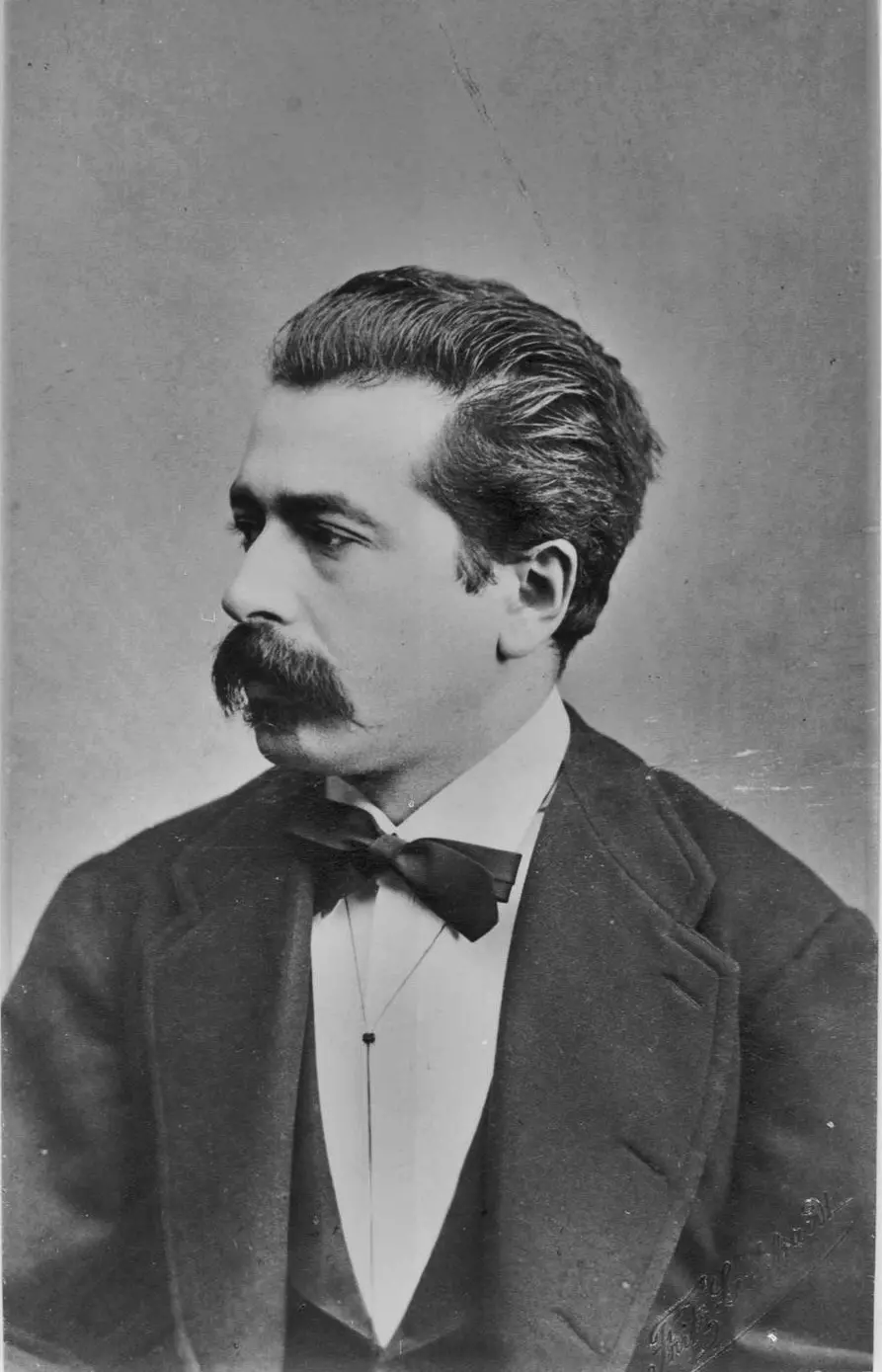
is a quintessential firework of the 19th-century violin repertoire, a piece that perfectly encapsulates the composer’s own legendary status as a peerless virtuoso. Composed around 1855 during his period as a touring artist, the work is a brilliant fusion of two distinct character pieces: the playful, jesting "scherzo" and the frenetic, wild Italian "tarantella." The result is a work of breathtaking speed, technical audacity, and infectious energy that pushes the violinist to the very limits of their ability. Wieniawski, often called the "Chopin of the violin," possessed an uncanny ability to blend jaw-dropping pyrotechnics with
...A Devil's Dance on Four Strings
There is a legendary, if perhaps embellished, tale about Henryk Wieniawski performing the Beethoven Violin Concerto in a salon. Having misplaced the sheet music for the cadenza he had written, he simply launched into a completely new, on-the-spot improvisation of such staggering brilliance that the accompanist, dumbfounded, stopped playing altogether. Wieniawski, without missing a beat, leaned over and hissed, "Play a chord, any chord!" This story perfectly captures the essence of the man and his music: a supreme artist whose technical command was so absolute that he treated impossible challenges as mere opportunities for dazzling showmanship. It is this very spirit of audacious, high-wire virtuosity that is distilled into its purest form in his Scherzo-Tarentelle, Op. 16, a piece that remains a benchmark for violinists and a source of breathless excitement for audiences everywhere.
The Virtuoso as Composer
In the 19th century, the figure of the traveling virtuoso-composer reached its zenith. Following in the footsteps of the demonic Niccolò Paganini, whose feats on the violin were so extraordinary they were rumored to be of supernatural origin, a new generation of instrumental superstars like Franz Liszt on the piano and Pablo de Sarasate on the violin captivated Europe. Henryk Wieniawski was firmly in this pantheon. As a Polish violinist, his compositions were not merely academic exercises but were forged in the crucible of the concert stage, designed specifically to showcase his own formidable technique. Works like his two violin concertos, the Légende, and the Polonaises were vehicles for his artistry. The Scherzo-Tarentelle, dedicated to his revered teacher Lambert Massart, is perhaps the most concentrated example of this philosophy. It is not music that contemplates; it is music that acts, demanding immediate attention through its sheer velocity and brilliance.
A Hybrid of Fire and Wit
The title itself reveals the work's clever construction. Wieniawski masterfully combines two distinct musical forms into a seamless and electrifying whole. The "Scherzo," Italian for "joke," is a form known for its rapid tempo, rhythmic vitality, and playful character, often found as a movement in larger symphonies or sonatas. The "Tarantella" is a folk dance from Southern Italy, traditionally played in a frantic 6/8 meter. Its mythological origins lie in the belief that the dance’s wild, frenetic movements could sweat out the poison from a tarantula's bite. By fusing the witty, mischievous nature of the scherzo with the unstoppable, almost delirious energy of the tarantella, Wieniawski creates a piece that is at once humorous and dangerously thrilling.
The Opening Gambit: A Whir of Staccato
The piece begins in G minor with one of the most iconic openings in the violin repertoire. The violin enters with a whispered, moto perpetuo passage of flying staccato notes, marked leggierissimo (as lightly as possible). This is not a bold, declamatory statement but a conspiratorial one, as if the violinist is igniting a fuse. The piano provides a spare, rhythmic underpinning, like the steady pulse of a dancer's feet. This initial theme is less a melody and more a gesture of pure energy, built from scurrying scales and arpeggios that demand flawless bow control and a light, flexible wrist. The dynamic tension is palpable; the music feels coiled and ready to spring, creating an atmosphere of breathless anticipation.
The Lyrical Interlude: A Moment of Song
Just as the listener becomes accustomed to the relentless forward drive, Wieniawski abruptly shifts gears. The music modulates to the relative major key, B-flat major, and then to a warm G major for the central trio section, marked dolce cantabile (sweetly, in a singing style). Here, the frantic energy gives way to a broad, romantic melody that showcases a completely different aspect of the violin’s character. This section is a beautiful example of bel canto writing for the instrument, requiring a rich, projecting tone and expressive vibrato. Wieniawski employs luscious double stops, creating harmonic richness and an almost orchestral texture from the solo instrument. This lyrical heart of the piece serves as a crucial point of contrast, a moment of poetic reflection that makes the eventual return to the frenzied dance all the more dramatic and effective.
The Dance Resumed: The Tarantella Unleashed
The respite is brief. The music seamlessly transitions back to the G minor whirlwind of the opening, but now the energy is amplified. The tarantella character becomes more pronounced, the 6/8 rhythm driving the music with an even greater sense of abandon. Wieniawski re-presents the initial material but intensifies it, adding new layers of technical difficulty. The passages feel more daring, the leaps wider, and the overall pace more breathless. It is in this section that the listener truly feels the exhilarating, edge-of-the-seat quality that is the hallmark of a great tarantella. The music seems to teeter on the brink of chaos but is always held in check by the composer’s impeccable structural logic and the performer's steely control.
An Arsenal of Violinistic Pyrotechnics
The Scherzo-Tarentelle is a veritable encyclopedia of advanced 19th-century violin techniques. Wieniawski leaves no stone unturned in his quest to dazzle. The flying staccato of the opening requires the bow to be thrown at the string, bouncing to produce a series of crisp, detached notes with a single bow stroke. He makes extensive use of left-hand pizzicato, a notoriously difficult technique where the violinist plucks the string with the fingers of the left hand while simultaneously bowing other notes. There are passages of rapid string crossings, blindingly fast scales, and challenging arpeggios that span the entire range of the instrument. In the final pages, Wieniawski incorporates artificial harmonics, which produce high, flute-like tones, adding an ethereal and brilliant sheen to the sonic texture as the piece hurtles towards its conclusion.
The Coda: A Final Burst of Flame
The work culminates in a blistering coda that serves as the final, definitive explosion of energy. Wieniawski builds the excitement by ratcheting up the tempo (accelerando) and the dynamics. The piano part becomes a thunderous torrent of chords, providing a powerful foundation for the violin's final acrobatic feats. The violinist executes a series of rapid up-bow staccatos and a final, triumphant rush up the G string, culminating in three decisive, fortissimo G minor chords. The ending is not graceful; it is abrupt, emphatic, and utterly exhilarating. It leaves both the performer and the audience breathless, providing a perfect, explosive conclusion to this miniature masterpiece of Romantic virtuosity.

Follow us : 


Sheet Music International - Copyright 2025 all rights reserved
| English: Sheet Music (PDF) | Free Scores | Français: Partitions (PDF) | Musique gratuite | Ελληνικά: Παρτιτούρες (PDF) | Δωρεάν μουσική |
| Deutsch: Noten (PDF) | Kostenlose Partituren | Español: Partituras (PDF) | Música impresa | Português: Partituras (PDF) | Música gratuita |
| Italiano: Spartiti (PDF) | Partiture musicali | Русский: Ноты (PDF) | Бесплатные партитуры | Norsk: Noter (PDF) | Gratis noter |
| Українська: Ноти (PDF) | Безкоштовні партитури | Polski: Nuty (PDF) | Darmowe nuty | Nederlands: Bladmuziek (PDF) | Gratis partituren |