Your Request is under process, Please wait.

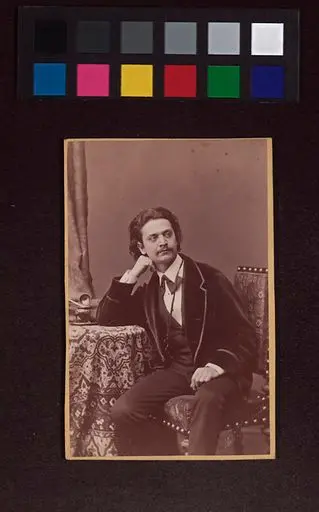
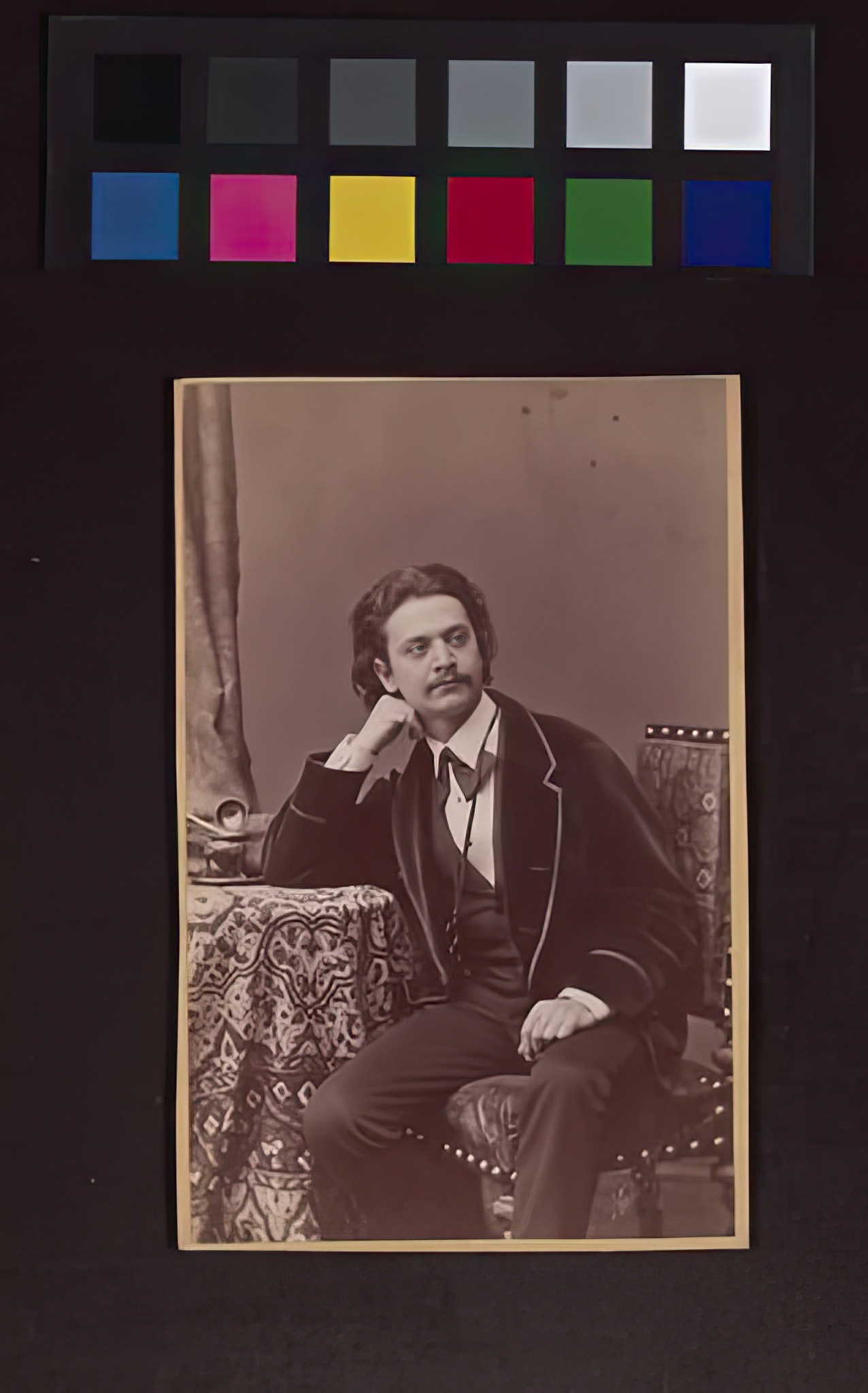
David Popper (1843 – 1913)
Download free sheet music from David Popper.
For any serious cellist, the name David Popper is synonymous with technical mastery. We invite you to explore the works of the man who defined modern cello playing with our library of high-quality, printable PDF scores. Dive into his indispensable pedagogical work, the High School of Cello Playing, or master the brilliant character pieces like Elfentanz and the fiery Hungarian Rhapsody. Popper’s compositions are more than just exercises; they are masterfully crafted pieces designed to make the cello sing, dance, and soar. Each download is formatted
...The Architect of Modern Cello Playing
In the 1860s, the formidable conductor, pianist, and musical titan Hans von Bülow—a man not known for dispensing praise lightly—heard a young cellist perform. He was so astonished by the player’s flawless technique, lyrical tone, and commanding musical presence that he immediately sought him out. The conductor, a champion of Johannes Brahms and Richard Wagner, used his immense influence to secure the young man a prestigious post as Kammervirtuos (Chamber Virtuoso) at the court of Prince von Hohenzollern-Hechingen. The young cellist was David Popper, and Bülow’s early endorsement was just the beginning. Popper’s virtuosity would soon become the stuff of legend across Europe, earning him comparisons to the great violin virtuoso Paganini. But his most enduring legacy was not just as a performer, but as the great codifier of cello technique—the man who would write the "bible" for all aspiring cellists and become the architect of modern cello playing itself.
A Prague Prodigy
David Popper was born in Prague in 1843 into a Jewish family. His father, Angelus Popper, was the cantor of two synagogues, and David’s initial musical training was in the violin. However, his exceptional talent for the cello soon became apparent, and he was enrolled at the Prague Conservatory, the oldest institution of its kind in Central Europe. There, he studied with the German cellist Julius Goltermann, refining his innate musicality with rigorous technical discipline. He graduated at the age of 18, already a performer of astonishing ability. He immediately embarked on his first concert tour in Germany, where he met with immediate success. It was on this tour that he encountered the influential Hans von Bülow, whose patronage launched his international career. After a short stint in the service of the Prince of Hohenzollern, the orchestra was dissolved, and Popper moved to Vienna, the musical capital of the world. In 1868, he was appointed principal cellist of the Vienna Court Opera, a position of immense prestige that placed him at the very heart of European musical life.
The Touring Virtuoso
While the Vienna appointment provided a stable base, Popper’s restless spirit and phenomenal talent were destined for the international stage. For the next two decades, he toured relentlessly, cementing his reputation as one of the greatest instrumentalists of his time. He performed as a soloist with major orchestras and in recitals across the continent, from London to Moscow, and from Scandinavia to the Ottoman Empire. His technical command was considered absolute; he navigated the most treacherous passages with effortless grace, and his tone was praised for its warmth, power, and vocal quality. In 1872, he married the pianist Sophie Menter, a favorite pupil of Franz Liszt. The two formed a formidable duo, touring together and performing as a power couple of the Romantic era. Liszt himself held Popper in high regard, and the cellist became a part of the vibrant Liszt-Wagner circle.
During his travels, Popper composed a steady stream of works, almost exclusively for his own instrument. These were primarily salon pieces and virtuosic showpieces designed to delight audiences and showcase his incredible skills. Pieces like the gossamer Elfentanz ("Dance of the Elves"), the fiery Tarantella, and the passionate Hungarian Rhapsody became staples of his concert programs and remain beloved encores for cellists today. He also wrote four full-scale cello concertos, which, while less frequently performed now, served as major vehicles for his artistry. Though he was a close acquaintance of Brahms and other great symphonists, Popper's compositional ambitions were focused almost entirely on elevating the cello as a solo instrument. He understood its voice, its technical possibilities, and its emotional range better than perhaps anyone before him.
The Professor of Budapest
After his marriage to Sophie Menter ended in 1886, Popper’s life took a decisive turn. He accepted a teaching position at the newly opened Royal Hungarian Academy of Music in Budapest, where his old friend Franz Liszt had been the first director. Here, Popper found his true calling as a pedagogue. For the rest of his life, he dedicated himself to training the next generation of cellists. He was a demanding but inspiring teacher, and his studio became a magnet for the most talented young players from across Europe. His influence was profound, establishing a "Hungarian school" of cello playing known for its technical polish, rich tone, and expressive depth. Among his students were figures like Jenő Kerpely, who would become the cellist of the legendary Hungarian String Quartet, and Arnold Földesy, another renowned international soloist.
It was in Budapest, reflecting on a lifetime of performing and decades of teaching, that Popper created his magnum opus. It was not a grand symphony or opera, but a collection of etudes: the Hohe Schule des Violoncellspiels, Op. 73 ("High School of Cello Playing"). Published in 1901-1905, this set of 40 etudes is a systematic and comprehensive exploration of every facet of advanced cello technique. Each study isolates a specific technical challenge—thumb position, intricate string crossings, complex bowings, double stops, arpeggios—and transforms it into a musically compelling miniature. To this day, the "Popper Etudes" are considered the indispensable foundation of modern cello technique. Successfully navigating them is a rite of passage for every aspiring professional cellist, a testament to their brilliance and enduring pedagogical value.
Legacy
David Popper died in 1913 in Baden, near Vienna. While he was hailed as a preeminent virtuoso in his lifetime, his ultimate legacy is that of a composer and pedagogue who fundamentally transformed the art of cello playing. He expanded the technical and expressive vocabulary of the instrument far beyond what his predecessors had imagined. He left behind a rich repertoire of concert pieces that continue to charm audiences, but more importantly, he provided the technical bedrock upon which generations of cellists have built their artistry. In the practice rooms of conservatories around the world, the name Popper is spoken daily with a mixture of reverence and trepidation. He is the master whose brilliant and demanding etudes continue to challenge, frustrate, and ultimately elevate every cellist who dares to undertake them. He was not just a king of the cello; he was its great lawgiver.
Campbell, Margaret. The Great Cellists. Faber & Faber, 2011.
De'ak, Stephen. David Popper. T.F.H. Publications, 1980.
Potter, Tully. "Popper, David." Grove Music Online. Oxford University Press, 2001.
Stowell, Robin, ed. The Cambridge Companion to the Cello. Cambridge University Press, 1999.
Walden, Valerie. One Hundred Years of Cello Teaching: A History of Methods and Pedagogy from 1740 to 1840. Cambridge University Press, 2004.
Follow us : 


Sheet Music International - Copyright 2025 all rights reserved
| English: Sheet Music (PDF) | Free Scores | Français: Partitions (PDF) | Musique gratuite | Ελληνικά: Παρτιτούρες (PDF) | Δωρεάν μουσική |
| Deutsch: Noten (PDF) | Kostenlose Partituren | Español: Partituras (PDF) | Música impresa | Português: Partituras (PDF) | Música gratuita |
| Italiano: Spartiti (PDF) | Partiture musicali | Русский: Ноты (PDF) | Бесплатные партитуры | Norsk: Noter (PDF) | Gratis noter |
| Українська: Ноти (PDF) | Безкоштовні партитури | Polski: Nuty (PDF) | Darmowe nuty | Nederlands: Bladmuziek (PDF) | Gratis partituren |