Your Request is under process, Please wait.

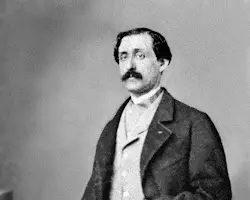
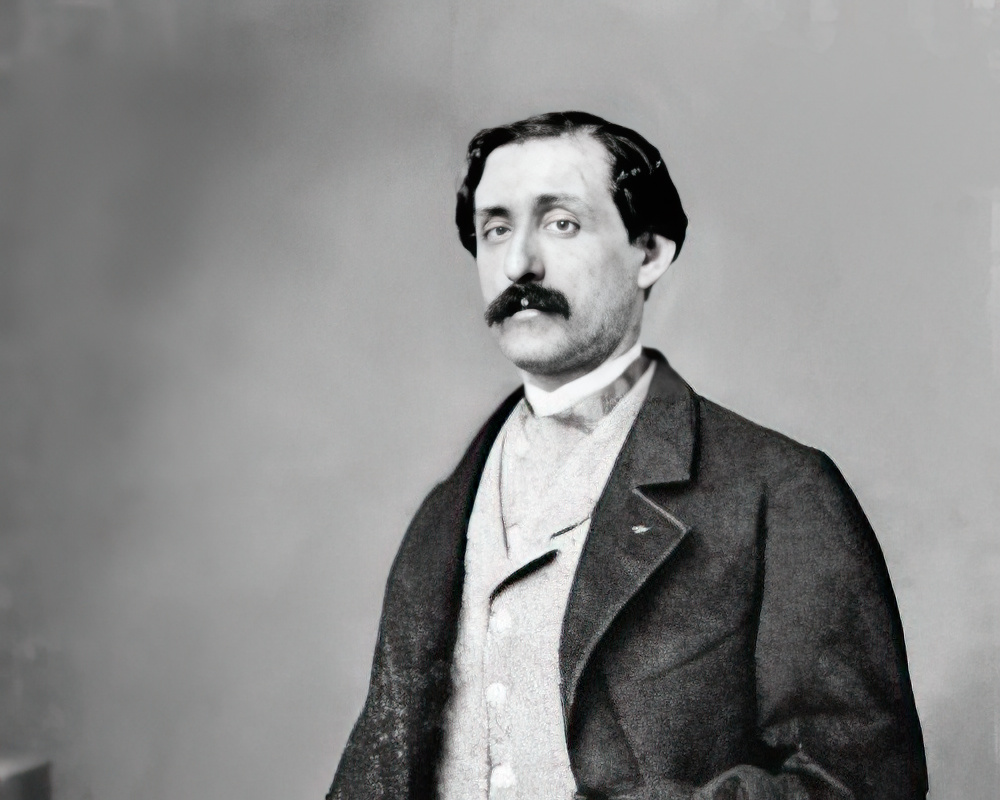
Louis Moreau Gottschalk (1829-1869)
Download free sheet music from Louis Moreau Gottschalk.
Experience the dazzling and rhythmically infectious music of Louis Moreau Gottschalk, America's first great piano virtuoso and a true musical pioneer. Born in New Orleans, Gottschalk blended the Creole, Caribbean, and Latin melodies of his youth with the virtuosic flair of European Romanticism, creating a sound that was uniquely American. We offer high-quality, printable PDF scores of his most famous piano works, from the brilliant showpiece "The Banjo" to the exotic "Souvenir de Porto Rico." Perfect for pianists seeking exciting and historically important repertoire, our collection brings the
...America's First Superstar: The Creole Virtuoso
In a glittering Parisian salon in the 1840s, a teenage pianist from the New World sat down at the keyboard. In the audience was the frail, poetic genius of the piano, Frédéric Chopin. After the young man finished, Chopin offered a stunning prophecy: "Give me your hand, my child; I predict that you will become the king of pianists." The young man was Louis Moreau Gottschalk of New Orleans, and Chopin's prediction would come true. Gottschalk would become a phenomenon, a matinee idol, and a trailblazing composer—America's first international music superstar, whose life was as romantic, dramatic, and brilliantly virtuosic as his music.
The New Orleans Crucible
Louis Moreau Gottschalk was born on May 8, 1829, in a city as culturally vibrant and unique as his future music: New Orleans. His background was a perfect reflection of the city's melting pot. His father was a Jewish businessman of German descent from London, and his mother was a member of a prominent French Catholic Creole family. He grew up absorbing a rich tapestry of sounds—the European operas sung at the French Opera House, the plaintive songs of his Creole relatives, and, most importantly, the vibrant, syncopated rhythms of African and Caribbean music he heard emanating from places like Congo Square. This multicultural sonic landscape became the very DNA of his musical soul.
Conquering the Old World
A child prodigy, Gottschalk quickly exhausted the musical resources of New Orleans. At the age of thirteen, he was sent to Paris to receive a formal European education. In a now-infamous incident, he was denied an audition at the prestigious Paris Conservatoire, whose director haughtily dismissed America as a "country of steam engines" where musicians were a joke. Undeterred, Gottschalk studied privately and was soon introduced to the elite Parisian salons.
His debut was a sensation. The Parisian audience had never heard anything like his compositions. Pieces like "Bamboula" and "Le Bananier" were built on the authentic Creole and Caribbean melodies he had absorbed as a child, combined with the dazzling virtuosic technique of Franz Liszt. He was an exotic and brilliant talent, and he became the talk of the town, earning the admiration of composers like Hector Berlioz and, most crucially, Chopin. After conquering Paris, he embarked on triumphant tours of France, Switzerland, and Spain, becoming a bona fide European star.
The American Idol
Gottschalk returned to the United States in 1853 as a national hero. He was America's first homegrown artist to have been celebrated by the European elite, and the country embraced him with patriotic fervor. He became the prototype of the modern touring concert artist, a 19th-century rock star. He traveled incessantly by train, bringing classical music to towns and cities across the continent, some of which had never before seen a concert grand piano. His grueling schedule saw him perform thousands of concerts.
His performances were legendary. He was a charismatic and handsome figure, and his concerts were a carefully crafted mix of his brilliant, rhythmically-driven showpieces, his soulful and sentimental ballads, and virtuosic fantasias on patriotic and operatic airs. He cultivated a stage persona of romantic melancholy, often performing his most famous sentimental piece, "The Dying Poet", with a world-weary sigh—a piece he privately came to loathe but was forced to play at nearly every concert due to its immense popularity.
The Composer of the New World
Gottschalk’s most important legacy is his work as a composer. He was the first to create a serious concert music that was recognizably and authentically American.
The Banjo: Perhaps his most famous piece, this is a brilliant and fiendishly difficult work that masterfully imitates the sounds of the popular American instrument. Through rapid-fire repeated notes and strumming-like figures, he captures the banjo’s energetic, folksy spirit in a virtuosic piano showpiece.
Souvenir de Porto Rico: Based on a Puerto Rican folk tune, this piece is a masterful set of variations that builds from a simple, marching theme into a rhythmically complex and exhilarating carnival-like atmosphere, showcasing his deep engagement with Latin American music.
L'Union: During the Civil War, Gottschalk, a staunch Unionist, composed this concert paraphrase on American patriotic airs. It cleverly weaves together "The Star-Spangled Banner," "Yankee Doodle," and "Hail, Columbia" into a technical tour de force that thrilled wartime audiences.
Scandal, Exile, and the Final Act
Gottschalk's life as a romantic idol was not without its perils. In 1865, while on tour in San Francisco, he became embroiled in a scandal involving a young woman from a local seminary. Facing a public outcry and potential legal action, he was forced to flee the country in disgrace, never to return to the United States.
He spent the final four years of his life in South and Central America, embarking on a new phase of his career as a musical pioneer. He traveled and performed throughout the continent, from the mountains of Peru to the cities of Argentina and Brazil. He acted as a kind of musical ambassador, organizing massive music festivals with hundreds of performers, and championing both European masterworks and local music.
His end was as dramatic as his life. In November 1869, during a festival in Rio de Janeiro, Brazil, he collapsed at the piano while performing his own poignant piece, "Morte!!" ("She is Dead!!"). He had contracted yellow fever and was suffering from an overdose of quinine. He died a few weeks later, on December 18, 1869, at the age of just 40. His music, a vibrant and unique fusion of cultures, remains his lasting monument.
Gottschalk, Louis Moreau. Notes of a Pianist. Edited by Jeanne Behrend, Princeton University Press, 2006.
Loggins, Vernon. Where the Word Ends: The Life of Louis Moreau Gottschalk. LSU Press, 1958.
Starr, S. Frederick. Bamboula!: The Life and Times of Louis Moreau Gottschalk. Oxford University Press, 1995.
Follow us : 


Sheet Music International - Copyright 2025 all rights reserved
| English: Sheet Music (PDF) | Free Scores | Français: Partitions (PDF) | Musique gratuite | Ελληνικά: Παρτιτούρες (PDF) | Δωρεάν μουσική |
| Deutsch: Noten (PDF) | Kostenlose Partituren | Español: Partituras (PDF) | Música impresa | Português: Partituras (PDF) | Música gratuita |
| Italiano: Spartiti (PDF) | Partiture musicali | Русский: Ноты (PDF) | Бесплатные партитуры | Norsk: Noter (PDF) | Gratis noter |
| Українська: Ноти (PDF) | Безкоштовні партитури | Polski: Nuty (PDF) | Darmowe nuty | Nederlands: Bladmuziek (PDF) | Gratis partituren |