Your Request is under process, Please wait.

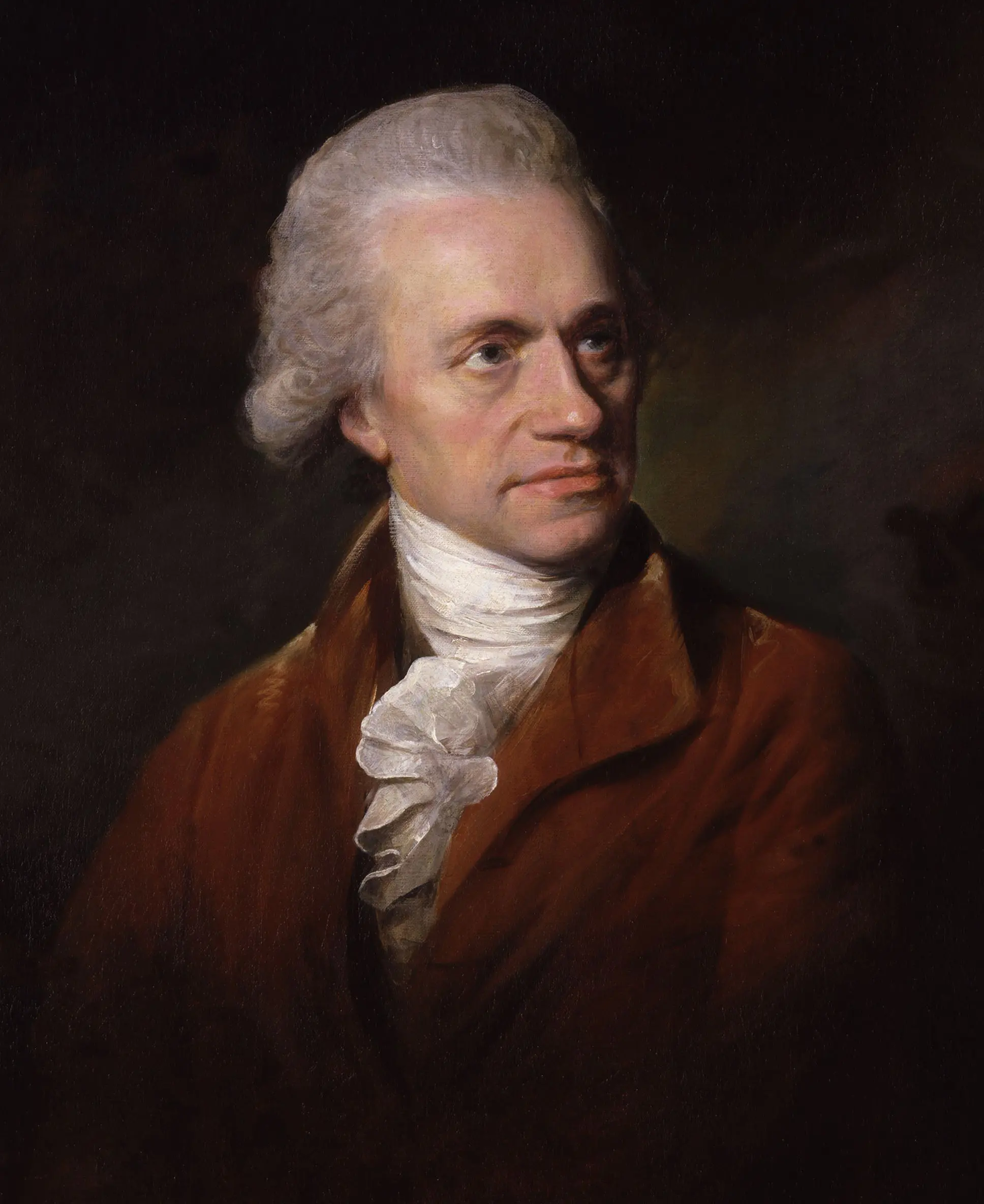
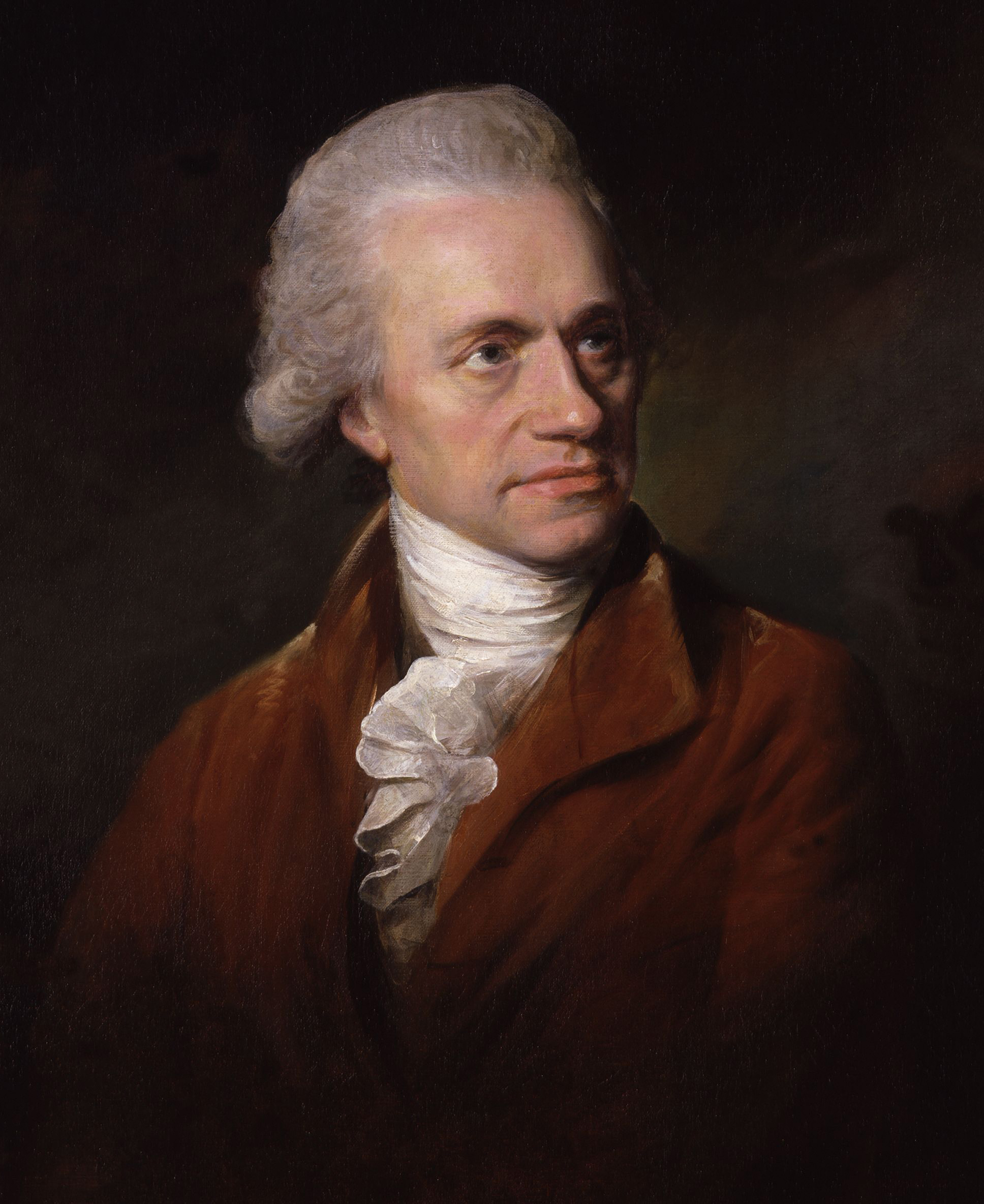
Frederick William Herschel (1738-1822)
Download free sheet music from William Herschel.
Discover the elegant compositions of one of history's most extraordinary minds, William Herschel. While celebrated worldwide as the astronomer who discovered the planet Uranus, Herschel spent the majority of his life as a professional musician and prolific composer. His music, written in the charming and graceful galant style of the early Classical period, reflects a life dedicated to order, beauty, and harmony—both on Earth and in the cosmos. We offer a fantastic selection of his symphonies and concertos, all available as high-quality, printable PDF files. Explore the creative work
The Man Who Composed the Heavens
On the night of March 13, 1781, a musician in the English spa town of Bath was conducting a meticulous sweep of the night sky. He wasn't a professional astronomer, but a composer, organist, and music teacher. He was using a powerful reflecting telescope, far superior to most in the country, which he had designed and built himself in the basement of his home. While systematically cataloging double stars in the constellation Gemini, his eye caught a faint object that was clearly not a star. It was too fuzzy, too disc-like. He logged it as a "curious either nebulous star or perhaps a comet." After weeks of observation by professional astronomers across Europe, the stunning truth was revealed: this musician had discovered a new planet, the first to be found since antiquity. The man was William Herschel, and his discovery of Uranus would not only change astronomy forever but would allow him to finally trade his career in music for his all-consuming passion for the stars.
From Hanover to Harpsichords
Born Friedrich Wilhelm Herschel in Hanover, Germany, on November 15, 1738, he was one of ten children in a family of talented musicians. His father, Isaak, was an oboist in the Hanoverian Military Band. Wilhelm and his brothers were trained from a young age on several instruments, with Wilhelm becoming a gifted performer on the oboe, violin, and later, the organ. In 1757, at the age of 19, Herschel and his brother Jacob fled Hanover for England to avoid the turmoil of the Seven Years' War.
Arriving in London with little money but immense talent and ambition, Herschel initially scraped by as a music copyist and performer. His skill and work ethic gradually earned him a series of more stable positions as a teacher and concert organizer in the north of England. He was a man of boundless intellectual curiosity, teaching himself Italian, Latin, and Greek, and devouring books on mathematics and science in his spare time. This thirst for knowledge and systematic thinking would become a hallmark of his entire life, in both music and science.
The Musician of Bath
Herschel’s musical career reached its zenith in 1766 when he was appointed organist of the prestigious Octagon Chapel in Bath, a fashionable and wealthy spa town. This was a highly visible and demanding role. He soon became the city’s Director of Public Concerts, managing an orchestra of around 35 musicians and composing a steady stream of music for his audiences. His life was a whirlwind of performances, lessons, and composition. He wrote a remarkable amount of music during this period, including at least 24 symphonies, numerous concertos for oboe, viola, and organ, as well as sonatas and sacred choral works.
In 1772, he brought his talented younger sister, Caroline Herschel, to England. He trained her as a singer, and she soon became the principal soprano soloist in his oratorio performances. While he managed his bustling musical career, Caroline managed his household, and soon, she would become his essential partner in a much grander pursuit.
The Secret Passion: Grinding Mirrors and Scanning Skies
Despite his professional success, music was for Herschel a means to an end. His true passion, ignited by reading books on optics and astronomy, was the cosmos. Frustrated by the quality of commercially available telescopes, he decided, with characteristic determination, to build his own. This was a Herculean task. He began casting and grinding his own mirrors from metal discs of copper and tin, a physically demanding and painstaking process that required absolute precision.
His house on New King Street in Bath (now the Herschel Museum of Astronomy) became a chaotic workshop. He and Caroline would spend up to 16 hours at a time in the basement, taking turns polishing the mirrors to achieve the perfect parabolic curve needed to focus light from distant stars. He melted horse dung in the laundry room to create molds for his mirrors. This obsession was all-consuming, conducted at night after his full day of musical duties was complete. It was with one of these magnificent homemade telescopes, a 7-foot reflector, that he would make his world-changing discovery.
A New Planet and a New Life
The discovery of Uranus in 1781 catapulted the provincial musician to international fame. Initially, Herschel wanted to name the new planet Georgium Sidus (George's Star) in honor of his patron, King George III, a move that greatly pleased the monarch. While the international astronomical community eventually settled on the name Uranus, from Greek mythology, the King was sufficiently impressed. In 1782, he granted Herschel a royal pension of £200 per year with the title of "Court Astronomer."
This pension was less than what he earned as a musician in Bath, but it was enough. It was the freedom he had longed for. At the age of 43, William Herschel was finally able to give up his musical career and dedicate himself entirely to astronomy. He moved his family and workshop to Slough, near Windsor Castle, to be closer to the King. There, he would build ever-larger telescopes, culminating in his monstrous 40-foot-long reflector, which was a marvel of the age.
Herschel the Composer: A Closer Look
With his astronomical legacy so immense, it is easy to forget the sheer volume of music he left behind. Herschel’s compositions are firmly rooted in the early Classical, or galant, style. His symphonies are well-crafted, energetic, and filled with pleasant melodies, showing the influence of the composers popular in London at the time, particularly Johann Christian Bach and Carl Friedrich Abel.
His works are not revolutionary masterpieces on the scale of his contemporaries Haydn or Mozart, but they are far from amateurish. They are the product of a skilled, professional musician writing for a specific audience. The Symphony No. 8 in C minor is a fine example of his work, containing the dramatic flair and driving rhythms of the Sturm und Drang style. His oboe and viola concertos are particularly noteworthy, written to showcase his own instrumental prowess. They are elegant, charming, and deserving of a place in the repertoire.
A Dual Legacy
William Herschel's contributions to science were monumental. After discovering Uranus, he went on to discover two of its moons (Titania and Oberon) and two moons of Saturn. He meticulously cataloged over 2,500 nebulae and star clusters, laying the groundwork for modern deep-sky astronomy. He was the first to propose that the Milky Way was a disc-shaped structure and to discover the existence of infrared radiation. His work, assisted throughout by the brilliant Caroline, fundamentally changed humanity's understanding of the universe.
He remains a perfect embodiment of the Enlightenment ideal—a true polymath whose restless curiosity could not be contained by a single field. He was a man who brought harmony to the concert halls of Bath and revealed the grand, silent harmony of the cosmos to the entire world. His music provides a fascinating auditory link to a mind that was equally at home with a musical score and a map of the stars.
Hoskin, Michael. The Herschel Partnership: As Viewed by Caroline. Cambridge: Science History Publications, 2003.
Hoskin, Michael. Discoverers of the Universe: William and Caroline Herschel. Princeton, NJ: Princeton University Press, 2011.
Lubbock, Constance A., ed. The Herschel Chronicle: The Life-Story of William Herschel and His Sister, Caroline Herschel. Cambridge: Cambridge University Press, 1933.
Griffiths, Martin. "William Herschel: The Composer." Astronomy & Geophysics 50, no. 1 (February 2009): 1.34–1.35.
Follow us : 


Sheet Music International - Copyright 2025 all rights reserved
| English: Sheet Music (PDF) | Free Scores | Français: Partitions (PDF) | Musique gratuite | Ελληνικά: Παρτιτούρες (PDF) | Δωρεάν μουσική |
| Deutsch: Noten (PDF) | Kostenlose Partituren | Español: Partituras (PDF) | Música impresa | Português: Partituras (PDF) | Música gratuita |
| Italiano: Spartiti (PDF) | Partiture musicali | Русский: Ноты (PDF) | Бесплатные партитуры | Norsk: Noter (PDF) | Gratis noter |
| Українська: Ноти (PDF) | Безкоштовні партитури | Polski: Nuty (PDF) | Darmowe nuty | Nederlands: Bladmuziek (PDF) | Gratis partituren |